
What to Do After an Extraction Facial in DC

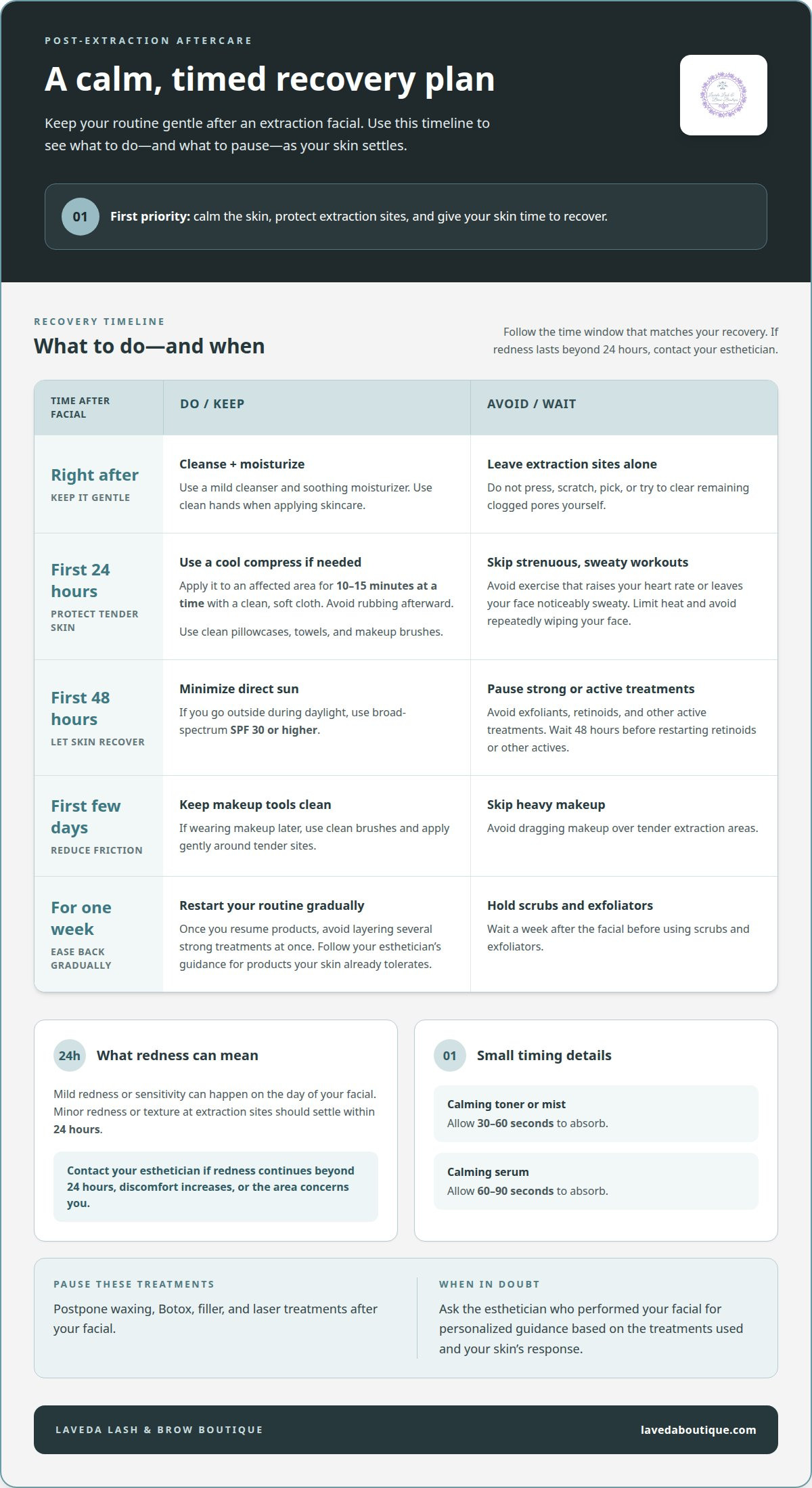
The first day after an extraction facial is for calming your skin, not correcting it. For what to do after an extraction facial in DC, keep your routine gentle: cleanse with a mild cleanser, apply a soothing moisturizer, and avoid touching or picking at your face.
Some redness or sensitivity around extraction sites can appear on the day of your facial. It should settle within 24 hours; contact your esthetician if redness continues beyond that or your skin concerns you.
Give your skin time to recover. Avoid exfoliants, retinoids, and other active treatments for 48 hours, limit direct sunlight, and skip heavy exercise that causes significant sweating for the first 24 hours. This guide explains how to care for your skin, what reactions to expect, when to contact your esthetician, and how to plan your recovery.
Table of Contents
Aftercare following an extraction facial
Immediately after a facial extraction, keep your routine gentle: cleanse with a mild cleanser, apply a soothing moisturizer, and leave the extraction sites alone. For what to do after an extraction facial in DC, focus on protecting your skin barrier while it settles.
Immediate Post-Extraction Care
Use clean hands only when applying skincare, and don’t press, scratch, or pick at clogged pores. Picking can spread bacteria and worsen irritation. A cold compress on an affected area for 10-15 minutes at a time can help with swelling. Choose a clean, soft cloth, and avoid rubbing the area afterward.
Use clean pillowcases, towels, and makeup brushes to reduce contact with residue while extraction sites recover. Don’t try to clear remaining clogged pores yourself. Pressure can inflame the skin or leave marks instead of improving the result.
Ongoing Aftercare Instructions
For ongoing care, use a mild cleanser and a soothing moisturizer, then keep your routine simple. Avoid harsh products, exfoliating treatments, and retinoids for 48 hours after extractions. Hold scrubs and exfoliators for a week after a facial. If your acne-prone skin already tolerates AHAs or BHAs, follow the guidance given for your skin.
For safe, personalized post-extraction skincare advice in Washington, DC, contact the esthetician who performed your facial. They can tailor instructions to the treatments used and your skin’s response. If you leave during daylight hours, apply broad-spectrum SPF 30 or higher, and minimize direct sun for at least 48 hours.
Makeup and Active Skincare Timing
Skip heavy makeup for the first few days after a facial. If you wear makeup later, use clean brushes and avoid dragging product over tender extraction sites. Applying makeup gently helps limit friction and contact with residue.
Wait 48 hours before restarting retinoids or other active treatments. Restart gradually rather than layering several strong products at once. Niacinamide at 4-10% can support a calming routine; avoid high-concentration vitamin C above 5% L-ascorbic acid on post-extraction skin. Gentle care gives skin time to restore its balance before your usual routine resumes.
After a calming toner or mist, allow 30 to 60 seconds to absorb; after a calming serum, allow 60 to 90 seconds. Postpone waxing, Botox, filler, and laser treatments.
Expected redness and signs to contact an esthetician
Mild redness or sensitivity can follow extractions, especially on the day of a facial. The appearance should improve as the skin settles; watch how it changes over the next 24 hours.
Expected Redness and Extraction Experience
During an extraction, an esthetician applies pressure around a clogged pore, often with gauze-wrapped fingers or a metal tool. The pressure can feel uncomfortable, depending on your sensitivity. Extractions remove oil and dead skin cells, not dirt. A blackhead’s dark surface forms when oil in the pore oxidizes after exposure to air.
Some redness or slight texture around treated pores is expected on the day of your facial. Mild sensitivity can also occur, particularly if you have sensitive skin. The exact appearance depends on how many areas were treated and how your skin responds to pressure. Don’t judge the result immediately. Look for redness to ease rather than intensify.
Expected Healing Time
Minor redness or texture at extraction sites should resolve within 24 hours. Healing may look different across the face: one pore can appear calm while another remains slightly pink. Check the overall trend in natural light, and note whether the skin looks less irritated as the day progresses.
If redness lasts beyond 24 hours, contact your esthetician for guidance. Share when the facial took place, which areas were extracted, and whether the appearance has changed. Those details help distinguish lingering redness from the short-term response expected after pressure. Avoid picking at a mark to test whether it has healed.
When to Contact an Esthetician or Dermatologist
Contact your esthetician if redness continues beyond 24 hours or the treated area becomes increasingly uncomfortable. A professional should be properly trained; unskilled extraction can cause infection or scarring. DC licensing and sanitation requirements are separate from aftercare. Don’t treat a normal-looking result as proof of training or hygienic technique.
See a dermatologist when a skin concern needs medical assessment, rather than routine facial aftercare. A dermatologist can assess persistent or worsening concerns that fall outside the esthetician’s role. For personalized guidance about facial skincare and recovery, consider professional facial care in Washington, DC.
Incorrect pore extraction can break capillaries and make skin look blotchy. Tell your esthetician if you notice blotchiness, especially if it becomes more pronounced instead of fading. Describe when it appeared, which areas were treated, and whether discomfort has increased. Don’t press or pick at the area to inspect or change it. If you’re unsure whether it’s settling, contact your esthetician and explain how it has changed since the facial.
Avoiding strenuous exercise, sweating, and heat
Give freshly extracted skin a break from heavy exercise, excess sweating, and heat. Avoid strenuous activity for 24 hours after extractions, and limit steam rooms, saunas, and intense workouts around your facial.
Pause Workouts for the First 24 Hours
For the first 24 hours after extractions, skip workouts that raise your heart rate or leave your face noticeably sweaty. A run, spin class, or heated fitness session can expose tender areas to sweat and friction. Don’t wipe your face repeatedly with a towel; rubbing may add discomfort to skin that has just experienced pressure.
Choose a quiet activity instead, such as a relaxed walk in a cool setting. If you start to sweat, stop and let your skin cool without rubbing or touching the extraction sites. This helps protect recently treated areas from excess heat and avoidable irritation as they begin to heal.
Limit Heat and Steam
Steam rooms and saunas expose facial skin to sustained heat. Avoid them around the time of your facial, along with activities that cause significant sweating. A hot, steamy environment may increase flushing or discomfort after extractions. Choose a cooler setting and let your skin settle before returning to heat-focused routines.
At home, keep your environment comfortable rather than turning up the heat or using a facial steamer. Don’t place hot towels on extracted areas. Heat won’t clear clogged pores after your appointment and may make sensitive skin feel more reactive.
Plan Outdoor Activity Carefully
Excess sun exposure is another source of heat to limit after extractions. Minimize direct sunlight for at least 48 hours after a facial, especially during outdoor exercise or extended time outside. If you leave during daylight hours, use broad-spectrum SPF 30 or higher, as noted in your aftercare steps.
For example, move a midday run to a cooler, shaded time after the initial recovery period. Even a walk in direct sun exposes your skin to heat. Use the recommended sunscreen and avoid staying in direct sunlight longer than necessary.
Return to Activity Gradually
After the first 24 hours, ease back into exercise according to your skin’s comfort. Begin with a lower-intensity activity before resuming a workout that causes heavy sweating. If heat or sweat brings on discomfort, stop, cool down, and avoid rubbing your face. Don’t push through irritation to complete a planned session.
Keep your schedule flexible around treatments that involve extractions. Placing a facial before a demanding workout, sauna visit, or outdoor event can make aftercare harder to follow. Plan those activities for another time, and use the first 24 hours to protect your skin from avoidable inflammation. For personalized guidance, explore facial aftercare support.
Mask duration and occlusive hydration
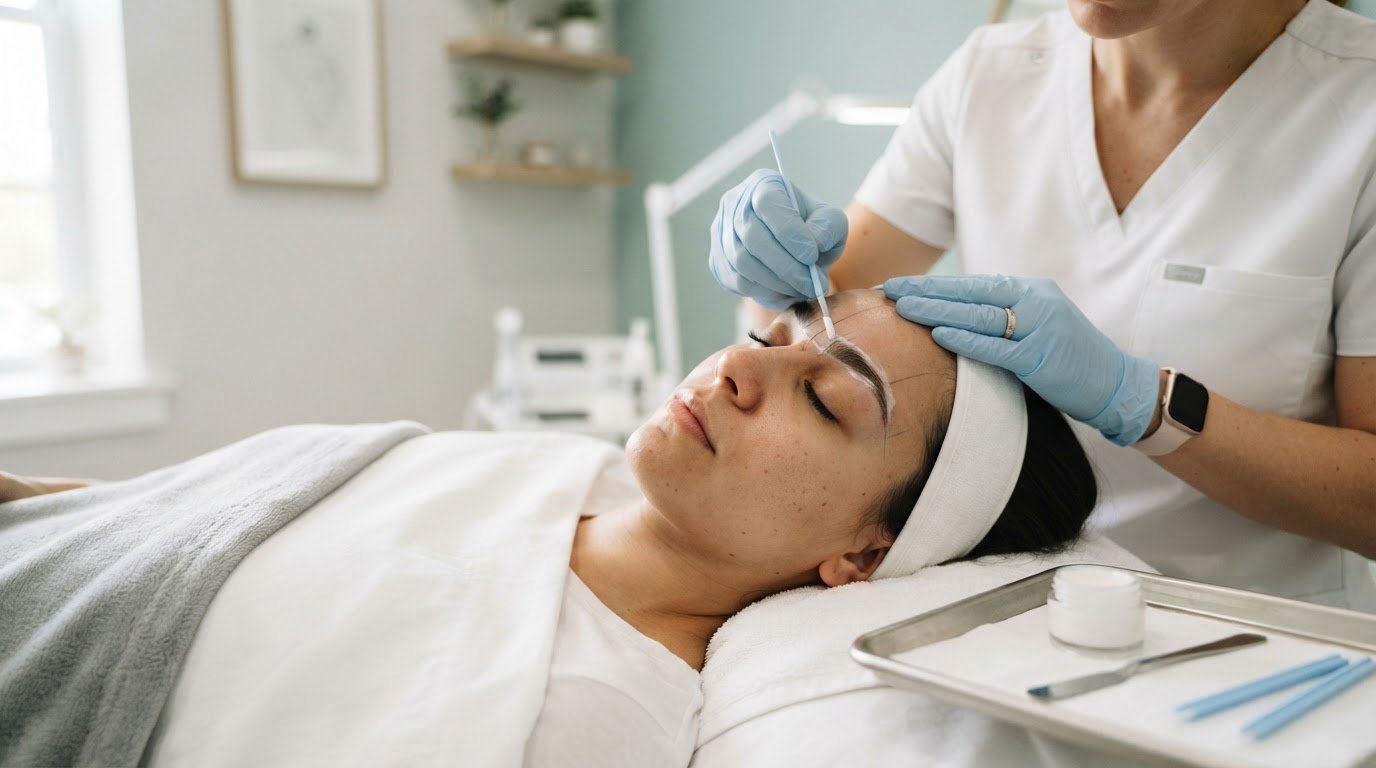
A calming mask can be applied after extractions to soothe skin, reduce redness, and support blemish recovery. Follow the recommended timing and handle treated areas gently when removing it. Hydrate your skin afterward without adding unnecessary steps to your routine.
Follow the Mask Timing
A fragrance-free calming mask should remain on the skin for 12 to 20 minutes after extractions. For extensive extractions, a 20-minute mask phase may be appropriate. Follow the timing given for the treatment rather than leaving a mask on longer. More time doesn’t automatically mean more calming, and a mask that dries down can feel tight against sensitive areas.
While the mask is on, keep it away from your eyes and don’t rub it across extraction sites. If it feels uncomfortable, gently remove it instead of waiting for the full recommended interval. The goal is to soothe skin after blackheads or whiteheads have been extracted, not to add friction to recently treated areas.
Remove the Mask Gently
When the recommended time is up, remove the mask without scrubbing or pulling at your skin. Use a gentle touch around each extraction site. Avoid pressure from washcloths, exfoliating tools, or scraping to remove visible residue. Freshly treated pores need calm handling, not another cleansing treatment.
After removing the mask, keep the next step simple. Pat your skin dry rather than rubbing, then apply a soothing moisturizer. This limits friction and adds hydration. Don’t layer a strong active treatment over the mask to clear remaining clogged pores.
Use Moisturizer to Support Hydration
An occlusive moisturizer forms a surface layer that helps slow moisture loss. Apply a comfortable, even layer after the calming mask, without pressing product into individual extraction sites. This helps maintain hydration while your skin settles. Avoid piling on creams or treatments, especially if your face feels tender after the extractions.
Polyglutamic acid is described as holding up to 5,000 times its weight in water at the skin’s surface. That figure describes water-holding capacity, not a requirement to add another serum. If your post-facial routine already includes a soothing moisturizer, keep to that simple step rather than adding products solely to chase a hydration claim.
Return to Your Routine Gradually
Use the calming mask and moisturizer to support recovery, not to remove blackheads or whiteheads at home. Don’t pick at a pore that still looks clogged. Results depend on the pore and your skin’s response, and some pores may need several treatments to clear.
Keep the routine gentle after masking. Avoid exfoliating products, retinoids, and active treatments for 48 hours after extractions, and wait a week before using scrubs or exfoliators. Reintroduce products gradually, so irritation from a particular step is easier to identify.
Recovery timing and appointment planning
Plan recovery in stages rather than expecting every pore to look clear immediately. Minor redness or texture should settle within 24 hours, while your routine and next appointment depend on your skin’s response.
Watch the First Few Days
During the first day, note whether redness is easing or lasting beyond 24 hours. Some people experience a temporary breakout or purging a day or two after a facial. Don’t assume every new blemish means the extraction failed. Avoid picking it, and track when it appeared and whether irritation is increasing.
After 2-3 days, begin a consistent at-home skincare routine if your skin feels settled. Cleanse gently and add products gradually, rather than restarting every active ingredient at once. This makes it easier to notice which step causes discomfort. Keep dead skin cells and clogged pores in perspective: one appointment may not clear every pore.
Set a Practical Appointment Interval
The recommended planning interval for the next facial is 3 weeks after the current facial. Treat that as a scheduling reference, not a reason to book extra extractions before your skin has recovered. Consider the remaining congestion, visible irritation, and how your skin responded to the last appointment.
Skin type can affect the interval. Sensitive skin may need facial extractions every 6-8 weeks. Monthly facials with extractions may benefit people with oily or acne-prone skin. These different schedules show why the same interval won’t suit everyone. Note your skin’s response after each visit to support more thoughtful planning.
Prepare for Your Next Visit
Before scheduling, consider whether redness lasted beyond 24 hours, whether breakouts appeared a day or two later, and whether your skin felt comfortable after resuming your routine. Those details help guide a conversation about timing and treatment focus. A skilled esthetician can consider your skin’s sensitivity and visible congestion when planning future care.
Don’t assume every clogged pore will clear in one session. Some may require several treatments. Allow enough time for recovery, then discuss whether another appointment makes sense based on your skin’s condition, not just the calendar.
For help planning a facial schedule around your skin’s recovery, get personalized recovery guidance.
Laveda Lash & Brow Boutique: Facials
Laveda Lash & Brow Boutique offers facials for readers planning ongoing skin care after extraction recovery. Once your skin has settled, a facial may be a next step in maintaining a consistent routine. Use the aftercare guidance from your recent appointment to decide when your skin feels ready for another treatment. If redness persists or discomfort increases, address that concern before planning another facial.
Choose a timing that gives your skin room to recover, and share any sensitivities or reactions when arranging your appointment. This context helps guide a facial suited to your current skincare needs. To discuss a facial appointment, contact Laveda Lash & Brow Boutique.
Make Your Next Skincare Step Deliberate
Your skin’s response can help guide future care. Rather than chasing an immediate, flawless appearance, give yourself time to notice what feels comfortable and which routine is sustainable. This can help you make more considered treatment decisions, especially if you have sensitive skin or your needs change over time.
If you’re considering what to do after an extraction facial in DC, use your next appointment to discuss your skin care priorities and preferences. A clear conversation can help you decide what fits your goals, whether you’re maintaining a facial routine or exploring another beauty service. Choose a next step that suits you, not one you feel pressured to book.
For a considered next step in your beauty routine, contact Laveda Lash & Brow Boutique. Move forward at your own pace, with a plan that feels right for you.
Frequently Asked Questions
What Is a Beginner Post-Extraction Calming Protocol and Why Does It Matter?
A beginner-friendly calming routine is a short, gentle sequence that avoids unnecessary products on freshly treated skin. Start with clean hands, use a mild cleanser, and apply a soothing moisturizer. Follow the aftercare instructions for any mask used during your facial. This simple approach makes it easier to notice how your skin responds before returning to a more involved routine.
What to expect after extractions?
After extractions, you may notice temporary redness, sensitivity, or slight texture around treated pores. Some people also experience a breakout or purging a day or two later. Don’t treat one blemish as a reason to squeeze or repeat the extraction yourself. Leave the area alone, note when the change appeared, and watch whether your skin settles or becomes more irritated.
What should you avoid after facial extractions, and for how long?
For 48 hours after extractions, avoid retinoids, exfoliating products, and other active treatments. Hold scrubs and exfoliators for a week after the facial, and skip heavy makeup for the first few days. Avoid strenuous exercise that causes significant sweating for 24 hours. If you’re planning what to do after an extraction facial in DC, leave space in your schedule for these recovery steps.
How long does redness or swelling last after facial extractions?
Minor redness or texture around extraction sites should resolve within 24 hours. Contact your esthetician if redness continues beyond that point. For swelling, apply a cold compress to the affected area for 10-15 minutes at a time. Avoid pressing or rubbing the skin while it cools. If the appearance worsens or continues to concern you, seek professional guidance rather than trying another treatment.
How should you cleanse and moisturize skin after extractions?
Cleanse with a mild cleanser and apply a soothing moisturizer, using gentle movements rather than scrubbing. Keep your hands clean before applying products, and pat your skin dry instead of rubbing with a towel. Choose a simple routine while the treated areas settle. If you leave during daylight hours, use broad-spectrum SPF 30 or higher to protect your skin from sun exposure.
What are signs of infection or complications after facial extractions?
Ongoing or worsening irritation, or redness that lasts beyond 24 hours, warrants contacting your esthetician. Don’t pick at a site or use unclean hands, since bacteria can increase infection risk and hinder healing. If you suspect infection or have a concern that needs medical assessment, contact a dermatologist. Avoid applying additional active products to try to treat a worsening area on your own.

granny is a horror arcade game where your main objective is to escape from a creepy old house filled with locked rooms and mysterious hallways. However, sneaking around won't be easy because Granny is always listening for suspicious sounds.