
What to Do About Unhappy Eyelash Extensions in Arlington

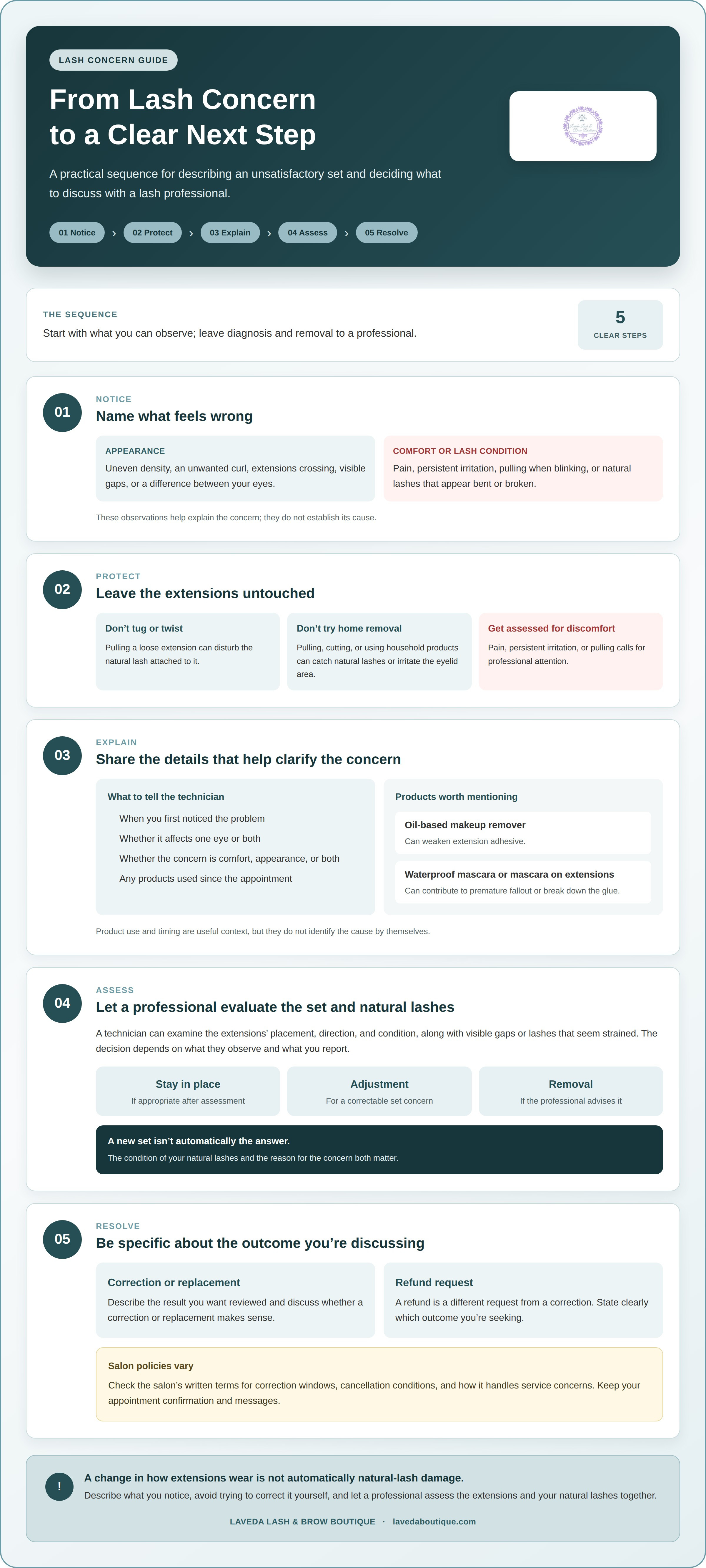
An unsatisfactory lash set doesn’t automatically mean your natural lashes are ruined. If the extensions feel painful, pull at your natural lashes, or cause irritation, don’t tug at them or attempt removal yourself. Arrange a professional assessment instead. If your concern is shape or fullness, note what feels wrong and discuss whether a correction or replacement makes sense. Knowing what to do if you’re unhappy with your lashes in Arlington starts with distinguishing a style concern from an issue affecting comfort or lash condition.
It’s reasonable to wonder whether extensions can harm natural lashes, especially if you notice discomfort or shedding after an appointment. Oil-based makeup removers and waterproof mascara can contribute to premature extension fallout, so application and aftercare are useful parts of understanding what may have happened.
This guide explains how extensions may affect natural lashes, what to do when a set causes problems, and when replacement may be appropriate. You’ll also learn what to consider before requesting a correction, so you can make a clear, informed decision about your next step.
Table of Contents
Do eyelash extensions ruin your natural lashes?
Eyelash extensions don’t automatically mean your natural lashes are damaged. Their condition depends on what you notice and how the extensions are worn and cared for. A comfortable, balanced set differs from one that pulls, causes irritation, or changes how your natural lashes appear. If you’re concerned, pause cosmetic adjustments and arrange a professional assessment of the set and your natural lashes.
Start by identifying the specific change. Look for sparse areas, lashes that appear bent or broken, or extensions that pull when you blink. These observations don’t establish the cause, but they give a lash professional useful details. Mention when the problem began and whether it affects one eye or both. Avoid pulling or twisting extensions to test their attachment.
Notice discomfort: Pain, persistent irritation, or pulling deserves prompt professional attention.
Keep makeup gentle: Oil-based removers can weaken extension adhesive, while waterproof mascara can contribute to premature fallout.
Skip mascara: Mascara on extensions can break down the glue and shorten their wear.
Don’t pull: Tugging at a loose extension can disturb the natural lash attached to it.
Protecting natural lashes starts with avoiding extra stress. If mascara or remover may have affected the set, tell the professional which products you used. For example, mention whether you used waterproof mascara or an oil-based makeup remover. These details can help distinguish an aftercare concern from a fit or appearance issue. Don’t apply more product to disguise gaps before the assessment.
Natural lash health also affects how a set looks and feels. A professional can examine visible gaps, uneven lengths, and lashes that seem strained, then discuss whether the extensions should remain, be adjusted, or be removed. A new set isn’t automatically the answer. The condition of your natural lashes and the reason for your concern both matter.
For a clear assessment, describe the problem without pulling at your lashes. Note whether you’re concerned about comfort, appearance, or both. If you have irritation, say when it started and whether it is worsening. Leave the extensions untouched until a professional advises you on the next step. This careful approach helps protect your natural lashes while making the concern easier to address.
Mascara use is relevant to the extensions’ adhesive and how long the set lasts, but it does not by itself establish that natural lashes have been damaged. Avoid wearing mascara on extensions because it can break down the glue and shorten their lifespan. Keep that distinction in mind when describing your concern: a change in how the set wears is not necessarily the same as a change in your natural lashes.
If mascara was part of your routine, mention it alongside the change you noticed, such as a gap, a bent lash, or discomfort. The timing may help a professional understand what to assess, but it doesn’t identify the cause on its own. Focus on what you can observe and avoid trying to correct the appearance yourself. A professional can consider the extensions and your natural lashes together before advising whether an adjustment is appropriate.
How a lash professional can address problems with your lashes
A professional assessment can distinguish an appearance concern from a problem involving comfort or lash condition. The next step depends on what the technician observes and what you report.
Addressing Unsatisfactory Lash Results
Describe the result precisely: uneven density, an unwanted curl, extensions crossing, or discomfort when blinking. If the issue affects one eye, point out the difference. A technician can assess the set’s placement, direction, and condition before recommending an adjustment. Share when you first noticed the problem and any products you’ve used since the appointment. These details help clarify what may be corrected and what needs separate attention.
Home removal carries risks because pulling or cutting extensions can catch natural lashes or irritate the delicate eyelid area. Leave the set untouched rather than applying household products or trying to loosen the adhesive yourself. A professional can assess whether the extensions should stay in place or be removed, based on their condition and your natural lashes.
Salon Fixes, Refunds, and Cancellations
Policies for corrections, refunds, and cancellations vary by salon; there’s no single policy for every Arlington appointment. Read the salon’s written terms for correction windows, cancellation conditions, and how it handles concerns after a service. Keep your appointment confirmation and any messages, then describe the specific result you’re unhappy with. A correction and a refund are different requests, so state which outcome you’re seeking.
If you’re concerned about unsafe or unhygienic conditions in Arlington, record the salon name, visit date, and what you observed. For information about applicable rules, contact your local cosmetology board or state health department. The relevant agency can direct you to local or state information.
Choosing a Technician for Correction or Removal
Choose a technician who discusses your concern before proposing a change. A focused assessment should cover extension placement, the condition of your natural lashes, and whether the set needs adjustment or removal. Explain any discomfort, visible gaps, or difference between your eyes. Notice whether the technician clearly explains the proposed next step and gives you a chance to discuss your goals.
Ask how the technician would address your specific concern, such as extensions pointing in different directions or a set that feels heavy. Clear explanations matter more than a quick promise of a particular result. Share your appointment details and relevant product use, then decide whether the proposed plan addresses the issue you raised. Avoid agreeing to a new set before the technician assesses the current one.
When to replace an unsatisfactory set
Replacement makes sense when the current set no longer gives you the shape, balance, or coverage you want, but it isn’t the only option. A professional may recommend a focused correction if the concern is limited, such as a few extensions pointing in the wrong direction. The decision should reflect the set’s condition, your natural lashes, and the result you want next.
Look at the problem area and identify what bothers you most. Does one eye look fuller? Do the extensions appear uneven from the side? Has the overall style become uncomfortable or stopped suiting your preference? Specific examples help distinguish a localized adjustment from a set that needs to be removed and replaced. Don’t judge the result by a single gap without considering the rest of the set.
A professional assessment can clarify which option fits:
Correction: Consider it when the issue is isolated, such as a small area with inconsistent direction.
Removal: Discuss it when the existing set is tangled, uncomfortable, or unsuitable for the result you want.
Replacement: Consider it when the current set needs to come off before a different design can be created.
The condition of your natural lashes should guide the next step. If lashes look sparse, bent, or strained where extensions sit, point out those areas during the assessment. The professional can evaluate whether a new set is appropriate or whether removal alone better addresses your concern. Don’t treat replacement as an automatic fix: a different look won’t resolve an underlying issue with placement or comfort.
Your preferred result also matters. Describe the change you want, such as a softer appearance, more even coverage, or a different curl effect. Explain what you dislike about the current set instead of asking only for “more” or “less.” That distinction helps the professional discuss whether a correction can achieve your goal or whether a new design calls for replacing the set.
Before agreeing to replacement, ask what will happen to the existing extensions and how the proposed design differs. For example, if your concern is uneven fullness, clarify whether the plan changes placement, coverage, or both. If discomfort is the issue, explain where and when you feel it. The professional can assess the current set and your natural lashes before recommending a next step.
Choose replacement for a clear reason, not simply because the set feels unfamiliar. A precise assessment, specific concerns, and a defined style preference make the decision more considered. If your natural lashes appear affected, discuss their condition before any new application begins.
How soon should I contact an Arlington lash salon about a poor lash result?
Contact the salon as soon as you identify a specific problem. A visible gap, uneven direction, or uncomfortable pull is easier to describe before the set changes further. You don’t need to decide first whether you want a correction, removal, or replacement. Start by explaining what you see and how it feels. If you’re deciding what to do if you’re unhappy with your lashes in Arlington, a prompt, clear message is a practical first step.
Separate appearance concerns from comfort concerns. If one eye looks fuller, describe the difference and when you noticed it. If blinking feels uncomfortable or the extensions pull, report that promptly and avoid trying to adjust them yourself. A clear description helps the salon determine what kind of assessment the situation calls for.
Timing matters because each salon sets its own policies for reviewing a result. Check your appointment terms for any correction window, then contact the salon within that period if one applies. Don’t assume another salon’s policy is the same. If you can’t find the terms, send a concise message describing the issue and asking how to arrange an assessment.
Before contacting the salon, gather details that will make the conversation useful:
Describe the result: Name the concern, such as uneven fullness or extensions pointing in different directions.
Note when it began: Say whether you noticed it immediately or after using a product.
Explain the impact: Clarify whether the concern is visual, physical, or both.
Keep appointment details: Include the service date and any relevant messages or confirmation.
A photo can show a visible difference, such as one side appearing more curled. Use clear lighting and don’t edit the image. A photo won’t show discomfort, so describe that separately. If the issue changes between when you notice it and when you message the salon, mention that too.
For a concern about the result alone, contact the salon promptly and request an evaluation before making changes to the set. Applying mascara, using an oil-based remover, or pulling at an extension may alter what the professional needs to assess. Keep your description factual: what changed, where it appears, and what outcome you’re seeking. If you’re still weighing what to do if you’re unhappy with your lashes in Arlington, use those details to make your request specific.
If the salon’s written terms provide a review period, follow that process rather than waiting until the set changes substantially. If the terms don’t explain how to raise a concern, contact the salon directly and ask about the next assessment step. A timely, specific message gives the salon a clearer basis for discussing possible correction or removal.
Can I get a refund or correction for unsatisfactory lash extensions in Virginia?
A refund or correction depends on the salon’s policies and the circumstances of your appointment. The information here does not establish one refund rule for every lash service in Virginia. Review the salon’s terms and contact it directly with a clear description of the result. Requesting an adjustment is different from asking for your payment back.
Start with your appointment records. Find the service confirmation, payment record, and any written policy you received. Note the specific issue, such as uneven placement or a result that differs from the agreed style. Then state the resolution you’re requesting. A concise, factual message gives the salon a practical basis for responding.
Ask the salon to explain its process for handling concerns. Its terms may describe correction options, refund conditions, or cancellation policies. Read those details before booking a second appointment or changing the extensions yourself. If the policy includes a review period, follow the stated process and keep copies of your messages.
Keep your request specific:
Identify the appointment: Include the date and service shown in your confirmation.
Describe the issue: Explain what looks or feels wrong, without overstating what happened.
State your preferred outcome: Say whether you’re requesting a correction, removal, or refund.
Save the response: Keep written communication and any explanation of the salon’s policy.
If the salon offers a correction, ask what it would involve before accepting. For example, clarify whether the proposed change addresses the uneven area you identified or replaces the current set. If you prefer a refund, ask how the salon applies its written terms to your appointment. Don’t assume a correction automatically includes a refund or that every concern receives the same response.
For questions about applicable salon requirements, the U.S. Environmental Protection Agency advises contacting your local cosmetology board or state health department. Requirements can vary by state and locality, so ask the relevant agency about rules that apply to your situation. This is separate from the salon’s own process for addressing an unsatisfactory result.
Keep the discussion professional and focused on the service, policy, and outcome. If the initial response doesn’t address your request, restate the issue and ask which policy applies. For help discussing a lash concern and possible next steps, request a lash assessment.
Laveda Lash & Brow Boutique
Laveda Lash & Brow Boutique offers a practical next step when an unsatisfactory lash result leaves you unsure what to do. Share what feels wrong, whether it’s an uneven appearance, discomfort, or a style that doesn’t suit you. The team can discuss your concerns and help you understand whether a lash service fits your needs. If you’re considering a different beauty look, brow lamination is also available.
Bring a clear description of the result you want and any details about the issue. That gives the conversation a practical starting point without assuming a correction or replacement is right for every situation.
Contact Laveda Lash & Brow Boutique to discuss your lash concerns and next steps.
Choose Your Next Lash Step With Confidence
Your next lash decision can be more intentional than simply correcting what went wrong. Use the experience to define what feels comfortable and what look feels like you. A clear preference gives the next conversation direction, whether you want a subtle change or a different overall effect.
If you’re deciding what to do if you’re unhappy with your lashes in Arlington, focus on the outcome you want rather than rushing into another set. Choose a next step that respects your comfort, personal style, and natural lashes. A thoughtful reset can help you approach future beauty choices with more confidence.
Use your next appointment to establish a shared vision before any service begins. Discuss the look that suits your routine and the level of definition you prefer. A considered conversation can help you move forward with clarity and feel more at ease about your choice.
Discuss your lash goals with Laveda Lash & Brow Boutique and take your next step with confidence.
Frequently Asked Questions
What should a lash professional do if you’re unhappy with your eyelash extensions in Arlington, VA?
A lash professional should review the concern and explain an appropriate next step. Laveda Lash & Brow Boutique states that customers can report concerns within 3 days, and the issue will be fixed to their satisfaction at no extra charge. Describe the result clearly and share when you noticed the problem. This helps distinguish a request for a service fix from a different concern requiring medical attention.
What is the safest way to have a professional remove unwanted eyelash extensions?
Arrange removal with a lash professional instead of pulling extensions off at home. The professional can assess the set and explain the removal approach before starting. Share any discomfort, sensitivity, or products already used around your eyes, since these details may affect the assessment. Avoid tugging at extensions while you wait, and ask the professional to pause if removal causes pain or significant irritation.
How can I tell whether a bad lash result needs medical attention?
Seek medical attention for eye pain, marked swelling, discharge, worsening redness, or changes in vision. These symptoms call for medical assessment rather than a cosmetic adjustment. A salon professional can discuss the appearance or placement of extensions but cannot diagnose an eye condition. If you’re unsure whether a symptom is related to the lash service, prioritize medical advice before arranging further lash work.


Comments