
Skincare Routine for DC Commuters That Fits Daily Travel

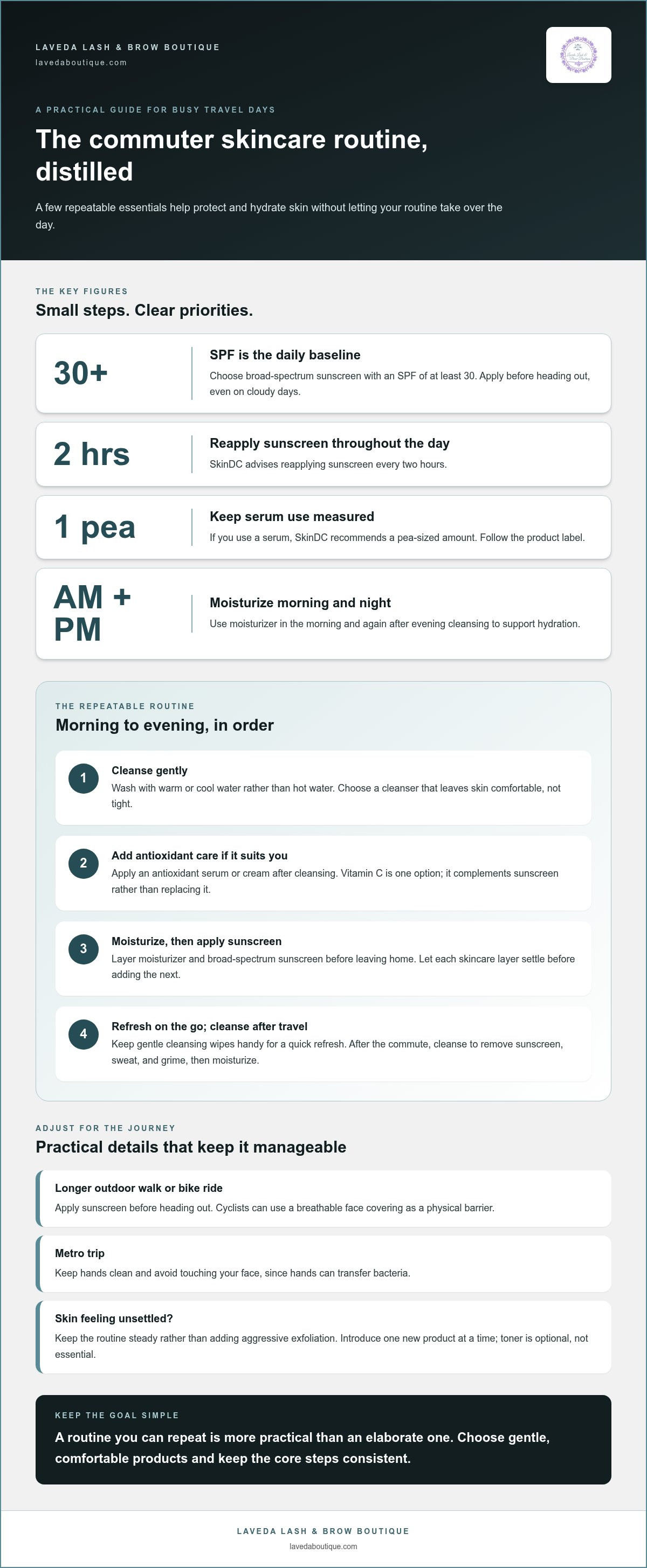
A simple routine beats an elaborate one when your day starts on the move. A skincare routine for DC commuters can center on antioxidant cream, broad-spectrum sunscreen, gentle cleansing wipes, and moisturizer. SkinDC recommends sunscreen with an SPF of at least 30 and reapplying it every two hours throughout the day.
Commutes can make consistency difficult: mornings are short, and cleansing is easy to put off after getting home. Keep the routine practical. Apply antioxidant cream and sunscreen before heading out, use a cleansing wipe when you need a quick refresh, and moisturize in the morning and at night.
This guide covers a streamlined routine, from layering essentials to choosing when to cleanse and keeping the habit manageable on busy travel days. You’ll also see which steps are optional, so your routine can support your skin without taking over your schedule.
Table of Contents
1. 3.What is the best skin care routine for daily commuters?
A practical skincare routine for DC commuters starts with gentle cleansing, moisturizer, and daytime sunscreen. Keep your morning steps consistent, then cleanse after travel to remove sweat, sunscreen, and grime. Pollution and shifts between outdoor weather and indoor air can leave skin feeling dry or irritated, so favor simple, hydrating products over frequent changes.
Start by identifying your skin type: oily, dry, normal, combination, or sensitive. Oily skin may feel slick across the face, while dry skin can feel tight; combination skin often shows both patterns. Sensitive skin may react with discomfort or redness, so introduce new products carefully. Choose a gentle cleanser that leaves your skin comfortable, not tight, and wash with warm or cool water rather than hot.
In the morning, cleanse gently, apply moisturizer, and use a pea-sized amount of serum if it suits your routine. SkinDC recommends a pea-sized amount. Follow with sunscreen before leaving home. This sequence prepares your skin without adding unnecessary steps. If cold air or heated indoor spaces leave your face feeling dry, choose a moisturizer that feels comfortable and hydrating under sunscreen.
Walking, biking, and taking the Metro call for the same core routine, with a few practical adjustments. Before a longer outdoor walk or bike ride, apply sunscreen; cyclists can use a breathable face covering as a physical barrier. On Metro trips, keep your hands clean and avoid touching your face, since hands can transfer bacteria.
In the evening, cleanse soon after getting home to remove sunscreen, sweat, and pollution. Use a gentle cleanser and warm or cool water, then apply moisturizer to support overnight hydration. If makeup or grime remains, cleanse thoroughly without scrubbing, since friction can add to irritation.
Commuting-related exposure can contribute to dullness, brown spots, and premature signs of aging. Keep your routine steady instead of adding aggressive exfoliation when your skin feels unsettled. Moisturizer morning and night can help protect the skin barrier, while sunscreen supports daily UV protection. These steps support comfortable skin, but they don’t promise wrinkle removal or firmer skin.
If irritation keeps returning, worsens, or disrupts your usual routine, arrange an evaluation with a dermatologist. Note when symptoms appear and which products or travel conditions seem to trigger them; those details can help guide the discussion.
2. Antioxidant cream and environmental stressors
Commuting exposes skin to more than changing weather. Air pollution, smog, and stress can contribute to skin damage, premature aging, brown spots, and dullness, as reported in research published in Experimental Dermatology. An antioxidant cream or serum can add a protective step to your daily routine. It complements cleansing and sunscreen rather than replacing either.
Antioxidants help address free radicals, unstable molecules associated with environmental exposure. Vitamin C is a common example: it can help neutralize free radicals, support collagen production, and strengthen the skin’s natural defenses. This makes it a practical ingredient to consider for a healthy-looking complexion exposed to city air. Choose a formula that suits your skin and feels comfortable beneath moisturizer and sunscreen.
Use an antioxidant product in the morning, when it fits naturally into your pre-commute routine. After cleansing, apply the serum or cream according to its label, then layer moisturizer and sunscreen. If you use a serum, SkinDC recommends applying a pea-sized amount. Let each layer settle before adding the next, especially if your sunscreen tends to pill over skincare.
Keep your routine measured. A concentrated formula isn’t automatically a better fit, and introducing several new products at once makes it harder to identify the cause of irritation. Add one antioxidant product, follow its directions, and observe how your skin responds. If your skin is sensitive, test the product on a small area first and avoid applying it to already irritated patches.
Ingredient choice matters. Vitamin C is one option for daytime antioxidant care, while the overall formula affects texture, layering, and comfort. A lightweight serum may suit someone who dislikes a heavier cream under makeup; a cream may feel more hydrating when skin gets dry during travel. Don’t assume every antioxidant formula works the same way. Read the label and keep the rest of your morning routine stable.
Antioxidants and sunscreen serve different roles in a commuter routine. An antioxidant can help counter free-radical damage, while sunscreen protects against ultraviolet exposure. Use both as directed, and don’t treat an antioxidant product as a substitute for sun protection. Pair these steps with evening cleansing to remove the day’s buildup and leave a clean base for nighttime moisturizer.
For a straightforward start, choose one vitamin C antioxidant product, apply it after morning cleansing, and follow with moisturizer and sunscreen. Keep the sequence consistent on workdays and weekends. If a product causes persistent irritation, stop using it and discuss the reaction with a dermatologist.
3. Daily sunscreen and reapplication
Make sunscreen part of every morning commute, not just bright days. UVA rays are present year-round, including on cloudy days, and can pass through car windows, according to the Skin Cancer Foundation. That matters for drivers and passengers, as well as people walking between transit stops. Daily sunscreen helps protect your complexion during ordinary travel, when sun exposure is easy to overlook.
Choose a broad-spectrum sunscreen with an SPF of at least 30, as SkinDC recommends. Broad-spectrum protection covers UVA and UVB rays. Apply it after moisturizer and before makeup, following the product label for the amount and method. Cover exposed areas of the face and neck, and include the ears if they’re uncovered. A vitamin C serum can complement sunscreen, but it doesn’t replace it.
Reapplication is part of the plan, especially when a commute includes time outdoors. SkinDC advises reapplying sunscreen every two hours throughout the day. Keep sunscreen accessible at work or in your bag so the next application doesn’t depend on returning home. If you walk between meetings or spend part of the day outside, build the reminder into your schedule.
Regular use has documented benefits. The Skin Cancer Foundation states that regular daily sunscreen use can reduce the risk of developing squamous cell carcinoma by about 40 percent. It also states that regular daily sunscreen use can lower melanoma risk by 50 percent. These figures describe risk reduction, not a guarantee for an individual. Consistent application remains a useful daily habit.
For sensitive skin, select a broad-spectrum sunscreen with an SPF of at least 30, as SkinDC recommends, and choose a formula your skin tolerates. Introduce one new sunscreen at a time and follow its label. If a product causes irritation, stop using it and discuss persistent reactions with a dermatologist. A patch test can help you observe how a new product feels before adding it to your full routine.
Apply sunscreen before heading out, even when clouds cover the sky or your route includes a car. Reapply every two hours throughout the day, following SkinDC’s advice. A quick check of exposed areas, such as your face, neck, and ears, can help you stay consistent. Keep the product with your daily essentials, alongside your keys or transit card.
Treat sunscreen as a distinct layer in your morning skincare routine. Apply it after moisturizer, then let it settle before makeup or a face covering. If you commute by car, remember that windows don’t block all UVA rays, according to the Skin Cancer Foundation. Consistent daily use supports sun protection and helps preserve a healthy-looking complexion.
4. Keeping cleansing wipes and moisturizer handy
A commuter kit works best when it solves specific problems: makeup needs tidying, your face feels uncomfortable after travel, or you arrive home too tired for a full routine. Keep gentle facial cleansing wipes somewhere easy to reach, such as a work bag or bedside table. They can refresh makeup without a sink, while moisturizer can restore a comfortable feel when skin feels dry.
Use wipes as a convenient cleansing option, not a reason to scrub. Wipe gently across your face, following the package directions and avoiding rough back-and-forth motions. If you wear makeup, use a wipe to remove visible residue, then cleanse more thoroughly at home when practical. After commuting, washing with a gentle cleanser helps remove grime; a wipe is a useful bridge when that step has to wait.
Placement makes the habit easier. Store one pack with your commute essentials and another beside the bed, where a no-rinse option is convenient after a late night. Keep the package closed between uses and take out one wipe at a time. One accessible step can be easier to follow than searching through drawers after a long day.
Choose a gentle facial wipe that feels comfortable on your skin, especially if you notice irritation after cleansing. Avoid pressing hard around delicate areas, and stop using a product that repeatedly leaves your skin uncomfortable. Wipes can tidy makeup during travel, but they don’t replace a complete evening cleanse when sunscreen, sweat, or grime has built up. Finish with moisturizer to help maintain moisture overnight.
Keep moisturizer available in a small personal container for a dry-feeling commute, and leave your regular product beside the sink or bed. Apply it after cleansing while your skin still feels comfortable, and follow the product directions. In the morning, moisturizer can sit beneath sunscreen; at night, it can finish your routine after cleansing. These familiar placements reduce the decisions your routine requires.
More cleansing isn’t automatically better. Hot water can remove the skin’s natural oils, so wash your face with warm or cool water. If your skin feels tight after repeated wiping, pause and simplify: use the wipe only when needed, then return to gentle cleansing and moisturizer. Changes in skin oil production can affect how comfortable a product feels, so notice whether your face becomes oily, dry, or irritated after use.
For a reliable setup, pair gentle wipes with one moisturizer you already tolerate. Keep the wipes accessible during travel and beside the bed, then use moisturizer after cleansing. This small arrangement supports a flexible routine without adding multiple products or complicated steps.
5. Keeping a commuter skincare routine simple and consistent
The strongest routine is one you can repeat on a rushed morning and after a tiring commute. Keep the core steps focused: gentle cleansing, moisturizer, and sunscreen. Add an antioxidant product only if it feels comfortable. A bright complexion doesn’t require a crowded shelf or a different product for every travel condition.
Build a repeatable sequence around your actual day. In the morning, cleanse, moisturize, and apply sunscreen before leaving. After getting home, cleanse away the day’s buildup and moisturize again. Put wipes in your commute bag and keep moisturizer near the sink, so the essentials stay visible when time is short.
Make one change at a time. If you add a serum or switch cleansers, keep the rest of your routine steady while you observe how your skin responds. This makes it easier to identify a product that causes irritation. SkinDC notes that toner isn’t a required skincare step, so leave it out if it complicates your routine.
Retinol is optional, not a commuter essential. SkinDC advises starting retinol slowly and gradually increasing its use. Noticeable improvement may take several weeks, so avoid adding it alongside multiple other products. A gentle, familiar routine is easier to maintain while you assess how your skin responds.
For WMATA trips, pack closed, leak-resistant travel containers and wipes in an easy-to-reach pouch. For carry-on luggage, keep products in travel-size packaging and separate liquids or creams from solid items when packing. Transit and airport screening are different contexts, so compact packaging makes the routine easier to manage without assuming the rules are identical.
The cost of a basic commuter routine depends on the products you choose, their sizes, how often you replace them, and what you already own. Starting with a cleanser, moisturizer, and sunscreen avoids buying optional steps before you need them. Add a serum or wipes when they solve a specific need, such as a quick refresh or a preferred antioxidant step.
Consistency also means keeping the routine comfortable, not forcing every step when skin feels irritated. Use the products you tolerate, follow their directions, and simplify if a new addition makes the routine harder to sustain. Set aside 15 minutes for personal relaxation if it helps you make evening care part of your regular schedule.
Keep the daily plan compact, then reserve professional beauty care for a separate goal. If you’re ready to focus on your lashes and brows, explore beauty services as a distinct part of your personal-care routine.
Laveda Lash & Brow Boutique: Lash Extensions
Laveda Lash & Brow Boutique offers Lash Extensions and Brow Lamination for commuters seeking a polished look beyond their skincare routine. Choose Lash Extensions to emphasize your lashes, or Brow Lamination if you want to focus on brow shaping. These beauty services complement personal care, but they don’t replace cleansing, moisturizer, or sunscreen.
Consider an appointment when you want professional attention to your lashes or brows as part of your broader beauty routine. Keep skincare simple on travel days, and treat lash or brow services as a separate choice based on the look you want. For personal care beyond skincare, choose the service that fits your preference.
Visit lavedaboutique.com to connect with Laveda Lash & Brow Boutique.
Make Your Routine Work for You
A useful skincare routine for DC commuters should fit your real schedule, not an idealized one. Keep the essentials easy to reach, and prioritize consistency over adding another step. As your preferences change, adjust the routine thoughtfully and notice which habits remain practical on workdays and weekends.
Personal care can extend beyond skincare. Laveda Lash & Brow Boutique offers Lash Extensions and Lash Lift for lash-focused beauty, along with Mani Pedi services. These are separate options for readers looking to complement a considered self-care routine, not additions to daily skincare.
Choose the next step that aligns with your personal goals. For professional beauty services, contact Laveda Lash & Brow Boutique. Keep your daily routine simple, make room for the care that feels right, and move forward with confidence.
Frequently Asked Questions
What is the best skin care routine for daily commuters?
The best routine is a short sequence you can repeat before and after travel. In the morning, cleanse, moisturize, and apply sunscreen; in the evening, remove the day’s residue and moisturize again. For a DC commute that combines Metro travel with outdoor walks, keep wipes accessible for a quick refresh. Adjust product textures to your skin’s comfort instead of adding steps simply to make the routine longer.
Why is a Skincare Regimen Important?
A regular regimen makes it easier to care for your skin consistently through changing schedules and surroundings. Cleansing removes accumulated residue, while moisturizer helps protect skin and maintain comfort. Sunscreen adds daily protection from ultraviolet exposure. In Washington, DC, a set sequence can also help you notice whether a particular product or travel condition coincides with irritation, making it easier to simplify your steps when needed.
What skincare concerns are common for Washington, DC commuters?
Commuters may notice dryness, irritation, or a dull-looking complexion after time around traffic, changing temperatures, and indoor environments. Research published in Experimental Dermatology reports that air pollution, smog, and stress can damage skin and contribute to premature aging, brown spots, and dullness. Note when discomfort appears, such as after a windy walk or a crowded transit ride.
How do DC seasonal humidity, cold, and UV levels affect daily skincare?
Shifts between outdoor weather and indoor heating or air conditioning can leave skin feeling less comfortable, so adjust your moisturizer’s texture to suit how your skin feels. Keep sunscreen in your routine year-round: the Skin Cancer Foundation says UVA rays are present throughout the year, including on cloudy days, and can pass through car windows. On colder or windier days, avoid harsh cleansing that leaves your skin feeling tight.
What is a simple morning skincare routine for a DC commuter?
Keep the morning sequence clear: use a gentle cleanser, apply moisturizer, then finish with sunscreen before leaving home. If you use an antioxidant serum, apply it after cleansing and before moisturizer, following its label. Let layers settle before applying makeup or a face covering. If you’re rushed, set the products together near your sink the night before, then keep sunscreen accessible for later reapplication.
Which sunscreen SPF and type work best for commuting in Washington, DC?
Choose a broad-spectrum sunscreen with an SPF of at least 30, as SkinDC recommends. Pick a formula that feels comfortable with your moisturizer and makeup, since a product that fits your routine is easier to use consistently. SkinDC advises applying sunscreen daily, including on cloudy days, and reapplying every two hours throughout the day. Keep it accessible when your Washington, DC day includes outdoor intervals.
How can commuters protect skin from DC air pollution and traffic exposure?
Combine daily cleansing with practical antioxidant care. Research published in Experimental Dermatology links air pollution, smog, and stress with skin damage, premature aging, brown spots, and dullness. After a traffic-heavy trip, wash your hands before touching your face, then cleanse when you get home. A vitamin C antioxidant product can complement the routine, while sunscreen remains a separate step.
How can commuters prevent dry or irritated skin from indoor heating and air conditioning?
Keep cleansing gentle and use moisturizer when your skin feels dry, especially after moving between outdoor air and heated or cooled interiors. SkinDC advises washing with warm or cool water because hot water can remove natural oils. If your face feels tight after a commute, simplify your routine instead of adding several products at once. Keeping moisturizer at your desk can make a midday comfort step convenient.



Modern equipment helps factories produce fiberglass helmets with greater consistency. Digital design tools can support accurate shell shapes, while controlled moulding processes help maintain even construction. A skilled fiberglass helmet manufacturer may also use inspection equipment to check dimensions, surface finish, and assembly quality. Technology can reduce production errors and make custom orders easier to manage. However, machines alone do not guarantee a dependable product. Trained workers, suitable materials, and regular quality checks remain important throughout manufacturing.
After trying Sled Rider, I came back to Snow Rider and noticed how both games make downhill movement really enjoyable. Snow Rider feels especially easy to pick up for a quick gaming session.