
Skincare for City Living in DC: Acne Care and Product Choices

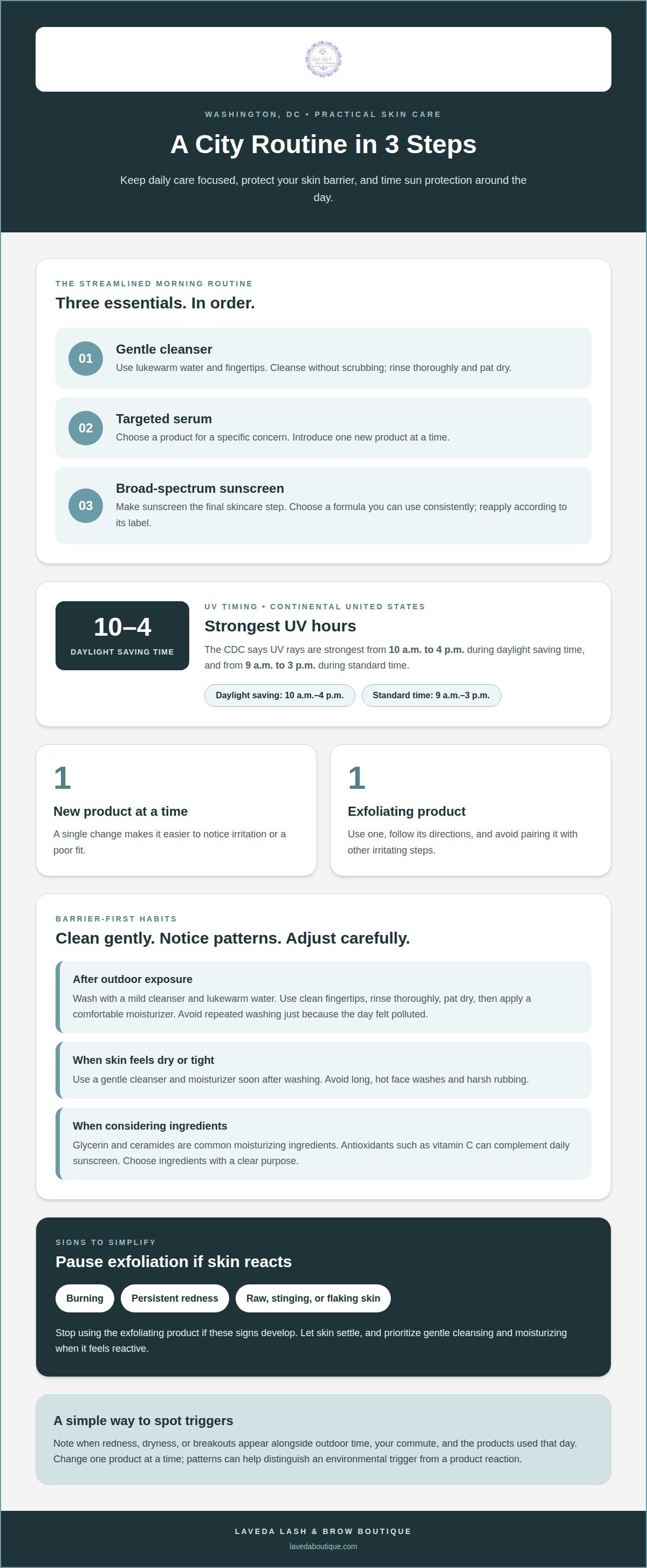
A streamlined routine is easier to sustain than a crowded shelf of products. For skincare for city living in DC, begin with three steps: a gentle cleanser, a targeted serum, and broad-spectrum sunscreen. The Centers for Disease Control and Prevention says UV rays are strongest in the continental United States from 10 a.m. to 4 p.m. daylight saving time, or 9 a.m. to 3 p.m. standard time.
A busy schedule can make acne care feel like another task to manage. Keep your routine focused, choose products for your specific concerns, and support your skin barrier instead of layering exfoliants without a plan.
This guide explains how to build a practical morning routine, manage acne care around a full day, and choose products for your concerns. You’ll also learn how to balance exfoliation with barrier care, so your regimen stays consistent and suits everyday life in Washington, DC.
Table of Contents
Barrier health and exfoliation
In Washington, protect your skin barrier while managing pollution, cleansing, and exfoliation. Choose a routine that removes buildup without leaving your skin persistently tight or uncomfortable.
Pollution Effects on Skin
Pollution can worsen acne, eczema, or sensitive-skin symptoms for some people. Notice whether redness, dryness, or breakouts follow time outdoors or a commute through Washington. This pattern may help you distinguish an environmental trigger from a product reaction. Keep a simple record of changes, and avoid adding several new products at once.
After outdoor exposure, cleanse gently rather than scrubbing. Use lukewarm water and your fingertips, then pat dry with a clean towel. Harsh rubbing can add friction when your skin already feels irritated. If your cleanser leaves your face tight, switch to a gentler option and simplify the rest of your routine.
Support your skin barrier with a moisturizer that suits your skin. Apply it after cleansing, especially where you feel dry. If you’re acne-prone, avoid treating every new blemish with repeated exfoliation. Irritation can make a routine harder to maintain, so look for patterns and change one product at a time.
Ingredients for Urban Pollution
Choose ingredients that serve a clear purpose in your routine. Glycerin and ceramides are common moisturizing ingredients; a well-tolerated moisturizer can help ease dry, tight sensations. Antioxidants, such as vitamin C, can complement daily sunscreen. Introduce one new product at a time so you can spot irritation or a poor fit.
Exfoliating acids and retinoids can help with some concerns, but combining several active products may irritate your skin. Start by using one exfoliating product less often than your routine’s other steps. Follow its label, and stop using it if burning or persistent redness develops. Don’t apply exfoliants to already irritated areas.
Sun protection matters alongside ingredient choices. According to the Centers for Disease Control and Prevention, UV rays are strongest in the continental United States from 10 a.m. to 4 p.m. daylight saving time (9 a.m. to 3 p.m. standard time). Broad-spectrum sunscreen helps protect exposed skin during those hours.
Hard Water and Skin Management
If Washington, DC tap water is hard, minerals can leave residue and contribute to a tight, dry feeling after washing. Skin responses vary. Ease discomfort with lukewarm water, a gentle cleanser, and moisturizer applied soon after patting your face dry. Avoid long, hot face washes, which can add to dryness.
Keep exfoliation measured. A smooth feel right after scrubbing doesn’t mean your skin barrier is comfortable. Use one exfoliating product, follow its directions, and stop if your skin feels raw, stings, or flakes. Resume only when your skin feels settled, and avoid pairing it with other irritating steps.
Make sunscreen the final skincare step in your morning routine. Choose a broad-spectrum formula you can apply consistently, then reapply according to its label. When your skin feels reactive, prioritize gentle cleansing and moisturizing over another active ingredient. This practical approach supports your skin barrier while addressing exfoliation and daily exposure.
How does Washington DC air pollution affect skin?
Washington, DC residents encounter varied conditions during commutes, on sidewalks, and indoors. Traffic corridors can expose skin to airborne particles and exhaust, while time outdoors brings direct contact with the surrounding environment. These exposures don’t affect every complexion in the same way. Consider your route, time outside, and your skin’s response together.
Pollution-related irritation can appear as dryness, redness, or increased sensitivity. Acne-prone skin may also feel more congested after a day outdoors. These signs don’t prove pollution is the only cause. New cosmetics, mask friction, sweat, and infrequent cleansing can also affect how your skin feels. Track changes alongside your routine.
Use a simple observation method. Note whether discomfort follows a walk beside busy traffic, an outdoor lunch, or a long commute. Record the products you used that day, including makeup and sunscreen. If the same pattern appears repeatedly, reduce unnecessary product changes and focus on gentle cleansing. This helps you assess your routine without adding several new variables.
After coming indoors, wash with a mild face cleanser and lukewarm water. Use clean fingertips instead of a rough cloth or abrasive scrub. Pay attention to your hairline, nose, and jaw, where makeup or sunscreen can remain. Rinse thoroughly, pat dry, and apply a moisturizer that feels comfortable. Avoid washing repeatedly just because the day felt polluted.
Keep acne care separate from aggressive cleansing. Scrubbing harder won’t remove congestion more effectively, and friction can leave your skin uncomfortable. Use acne-targeted products according to their directions. If your face feels tight or stings after cleansing, simplify your routine before adding another active ingredient. Consistency makes it easier to identify which step causes irritation.
At home, reduce contact with outdoor residue through practical habits. Wash your hands before touching your face, and remove makeup before bed. Keep pillowcases and reusable face cloths clean. After outdoor exercise, change out of sweaty clothes and cleanse gently. These steps address residue and friction without requiring a complicated lineup of products.
For sensitive or eczema-prone skin, prioritize comfort over a “deep clean.” Choose fragrance-free products if fragrance seems to trigger discomfort, and avoid introducing several formulas at once. Persistent or worsening irritation warrants medical assessment, especially when it disrupts sleep or daily routines. A clinician can distinguish acne, eczema, and other conditions that may look similar.
Build your approach around exposure and your skin’s response, not fear of city air. A gentle cleanse after time outdoors, a suitable moisturizer, and a consistent acne routine create a practical foundation. Keep notes on routes and products, then adjust only the steps that seem relevant.
What skincare ingredients help protect against urban pollution?
No single skincare ingredient creates a complete shield against urban pollution. A practical routine combines gentle cleansing, comfortable moisture, and daytime sun protection. Choose ingredients based on their purpose and your skin’s tolerance. For example, a cleanser removes surface residue, while moisturizer helps limit dryness after washing.
Glycerin is a humectant used in moisturizers to help skin retain water. Ceramides are lipid ingredients found in formulas that support the skin barrier. These may suit a routine focused on dryness or tightness after cleansing. Look for them in a moisturizer, then assess how your skin feels during regular workdays and outdoor commutes.
Niacinamide appears in products formulated for uneven tone, visible redness, or oiliness. Formulas vary, so start with one product and follow its label. If you already use acne treatments, avoid introducing several new active ingredients together. A simple routine makes it easier to tell which product feels comfortable and which may irritate your skin.
Antioxidant ingredients, such as vitamin C and tocopherol, can complement a daytime routine. They don’t replace sunscreen or cleansing. Consider the full formula, not just the featured ingredient. If a serum stings or causes persistent redness, pause it and return to products your skin already tolerates.
Panthenol and squalane are examples of ingredients used in moisturizing products. Their roles differ, so choose based on the texture and finish your skin prefers. A light lotion may feel more comfortable under makeup, while a richer cream may suit dry areas. Keep the number of new products manageable.
Read ingredient labels with a specific goal in mind. For example, choose a gentle cleanser if your face feels stripped after washing. Choose a moisturizer with barrier-supporting ingredients if dryness is your concern. For acne, don’t assume a product marketed as “detoxifying” will address breakouts. Focus on the ingredients and directions instead.
Introduce products one at a time. Use each new formula as directed, and observe how your skin responds before adding another change. This is especially useful if you have sensitive skin or already use exfoliating acids or retinoids. Too many active steps can make irritation harder to trace.
For a straightforward morning routine, cleanse, apply one targeted serum if it suits your concern, moisturize as needed, then use broad-spectrum sunscreen. In the evening, cleanse away the day’s residue and moisturize. Keep this routine consistent before changing another ingredient. The best choices meet a clear need and remain comfortable with daily use.
What is a simple morning skincare routine for city living?
Practical skincare for city living in DC starts with three steps: a gentle cleanser, a targeted serum, and broad-spectrum sunscreen. Keep the order consistent, then choose a serum for your main concern. A short routine is easier to repeat before a commute, an early meeting, or a full day outdoors.
Cleanse gently. Use a mild cleanser to remove overnight oil and residue. Apply it with clean hands, then rinse thoroughly. Lukewarm water keeps this step comfortable. If your skin feels tight afterward, use less cleanser or rinse with water alone when suitable for your skin. Skip rough cloths and vigorous scrubbing.
Choose one targeted serum. Match this step to a specific concern, such as uneven tone or excess oil. Use the product as directed, and avoid layering several new active formulas in one morning. If a serum stings or leaves persistent redness, pause it instead of adding another product to counteract discomfort.
Finish with broad-spectrum sunscreen. Apply it as the final skincare step before makeup or leaving home. Select a texture you can comfortably wear on a walk, Metro commute, or outdoor lunch. Follow the product label for application and reapplication directions. Keep the container near your morning essentials to make the step easier to remember.
If you’re acne-prone, resist turning your morning routine into a collection of spot treatments. Start with cleansing, one targeted product, and sunscreen. Use stronger treatments as directed on their labels. Introducing one new formula at a time helps you see whether it suits your skin, rather than guessing which product caused irritation.
Adjust the first step to suit your morning. After an evening with makeup or a rich product, a gentle cleanser may help. If your face feels dry or sensitive, avoid scrubbing and keep the routine minimal. The goal is a comfortable start, not a tight or overly polished feeling.
Make your routine commute-ready. Store your cleanser and serum together, and place sunscreen beside the items you take each morning. If you wear makeup, let skincare settle before applying it. On busy mornings, keep the sequence rather than adding steps: cleanse, target, protect.
Keep track of changes. For example, note whether a new serum coincides with stinging or a different sunscreen feels uncomfortable beneath makeup. Change one product at a time. This simple approach helps you refine a routine around your skin’s needs and your actual Washington schedule.
Which sunscreen is best for daily use in Washington DC
The best daily sunscreen is one you’ll apply consistently and comfortably. Choose a broad-spectrum formula, then consider its finish, feel, and fit with your routine. A lightweight lotion may suit a Metro commute and makeup. A cream may feel more comfortable if your skin tends toward dryness. No single texture works for every complexion.
Start with the label. Look for “broad-spectrum” protection and follow the product’s directions. Broad-spectrum sunscreen belongs in a morning routine because it protects against both UVA and UVB rays. Don’t rely on a moisturizer or foundation unless its label specifically identifies sunscreen protection. If you layer products, apply sunscreen as the final skincare step.
Texture can determine whether sunscreen becomes a daily habit. If a formula feels heavy under makeup, try a different finish. If your skin feels dry, a moisturizing texture may be more comfortable. If you’re acne-prone, choose a product that feels wearable without adding unnecessary layers. Try a new formula on an ordinary day before relying on it for a long outdoor outing.
Application matters as much as product choice. Cover exposed areas, including your face, ears, neck, and any visible chest. Follow the sunscreen label for the amount and application instructions. Reapply as directed, especially during extended time outdoors. Keep the product accessible in a work bag or near your daily essentials, so reapplication doesn’t depend on remembering it later.
Consider your schedule. A short walk to the office, an outdoor lunch, and an afternoon event create different opportunities for exposure. If your day includes time outside, bring sunscreen and follow its directions. On makeup days, choose an application approach that works with your products, so you don’t skip protection altogether.
Introduce sunscreen carefully if you have sensitive skin. Apply a new formula as its label directs, and notice whether discomfort follows. If one formula stings or feels unpleasant, try another texture or formula rather than abandoning sun protection. Keep other routine changes steady while assessing a new sunscreen. This makes it easier to identify what your skin tolerates.
For a simple morning sequence, cleanse, use a targeted serum if appropriate, then apply broad-spectrum sunscreen. Add makeup afterward if desired. The sunscreen that suits life in Washington, DC has broad-spectrum labeling, directions you can follow, and a finish you’ll wear consistently. Choose one that fits your commute and outdoor plans, then keep it within reach.
Laveda Lash & Brow Boutique
Laveda Lash & Brow Boutique can complement your personal care routine while you keep skincare focused on acne, cleansing, and sun protection. The boutique offers Lash Extensions and Brow Lamination, polished options for lashes and brows that don’t add skincare steps. Consider these services when you want to refine your beauty routine alongside the daily habits covered here.
Keep the roles clear: cosmetic services don’t replace sunscreen, acne care, or guidance for persistent skin concerns. Continue choosing products according to your skin’s needs, and treat lash or brow services as a separate part of your overall beauty routine.
Make Your Routine Work for Your Next DC Day
Let your routine evolve with your schedule. During a week with more outdoor plans, keep sunscreen accessible; if your skin feels sensitive, simplify your products. Notice what feels comfortable, and make changes deliberately rather than rebuilding your shelf after every breakout. This steady approach makes skincare for city living in DC practical beyond the bathroom mirror.
Beauty appointments can complement skincare without replacing it. Laveda Lash & Brow Boutique offers Lash Extensions, Lash Lift, and Mani Pedi for readers looking to refine other parts of their personal care routine. Choose services for the result you want, while keeping acne care and sun protection in their own place.
Explore Lash Extensions, Lash Lift, and Mani Pedi at Laveda Lash & Brow Boutique, and take your next step with confidence.
Frequently Asked Questions
What skincare products are suitable for DC's humid summers and dry winters?
Choose a moisturizer for the finish your skin prefers: a light lotion may feel comfortable under makeup, while a richer cream may suit dry areas.
What are affordable skincare products for pollution protection in the US?
Use a gentle cleanser to remove surface residue and a moisturizer with ingredients such as glycerin or ceramides to help ease dryness. Antioxidants such as vitamin C can complement sunscreen, but they don’t replace it.



Comments