
How to Give Feedback to Your Lash Artist for Sets You Love

A clear conversation can help shape a lash set around your preferences. Knowing how to give feedback to your lash artist means describing what you like, identifying what feels off, and sharing specific details instead of relying on phrases like “more natural” or “more dramatic” alone. You can be honest and considerate at the same time.
It’s understandable to hesitate, especially if you want to respect your artist’s skill or aren’t sure how to explain the difference between the look you wanted and the result you see. Calm, specific feedback gives your artist a clearer starting point for understanding your preferences.
This guide shows you how to acknowledge what’s working, describe what you’d like adjusted, and ask open-ended questions that encourage a useful conversation. You’ll also find examples for discussing fullness, length, and overall effect, so you can communicate with confidence and make future appointments more aligned with your style.
Table of Contents
1. Acknowledging positive and negative feedback
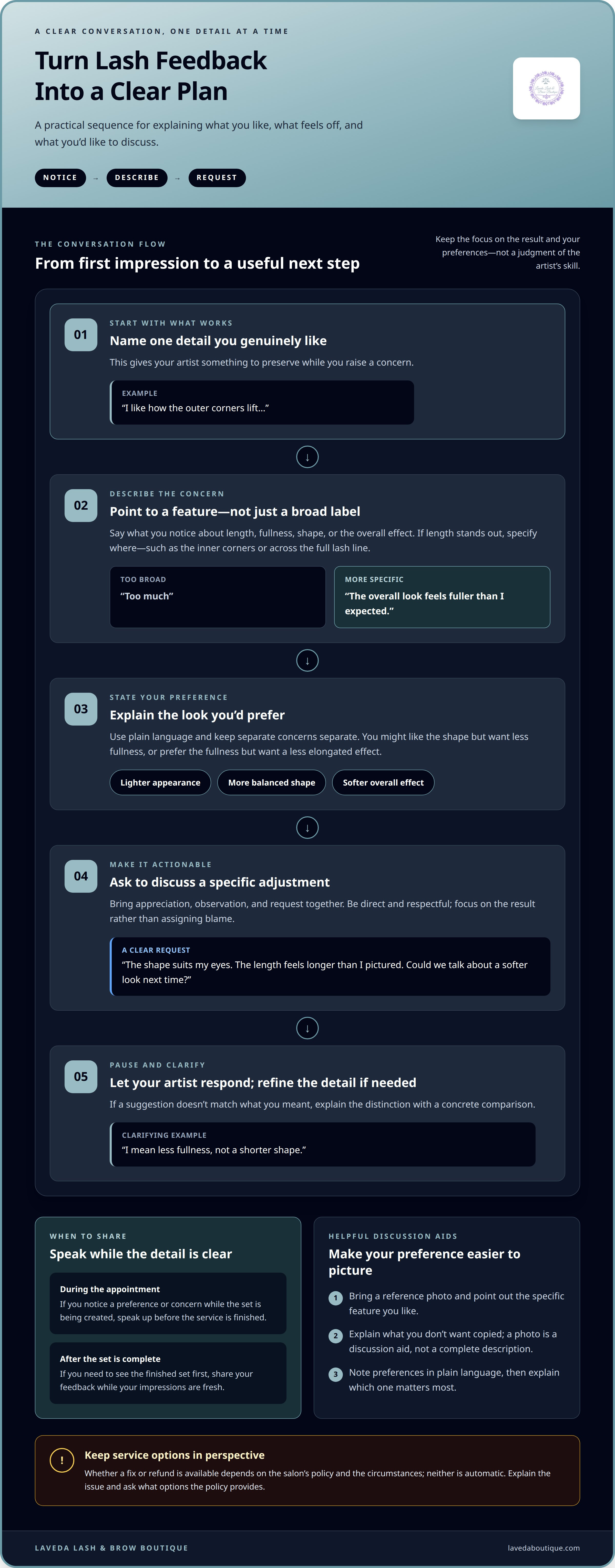
Start by naming one detail you genuinely like, then describe your concern clearly. For example: “I like how the outer corners lift, but the overall look feels fuller than I expected.” This gives your lash artist both a strength to preserve and a specific point to discuss. Avoid broad judgments such as “I hate them,” which don’t explain what you’d like changed.
Share feedback during the appointment if you notice a preference or concern while the set is being created. For example, if the mapping looks more dramatic than you intended, speak up before the service is finished. If you need to see the completed set first, share your feedback afterward while your impressions are fresh. Describe what you notice in the finished look rather than waiting until a later appointment.
Keep your tone respectful and your comments focused on the result. A useful structure is appreciation, observation, and request: “The shape suits my eyes. The length feels longer than I pictured. Could we talk about a softer look next time?” This acknowledges the artist’s work without hiding your preference. It also separates personal taste from a judgment about the artist’s skill.
Be direct without sounding accusatory. Try, “I was hoping for a more natural effect,” instead of, “You made them too dramatic.” If something feels uncomfortable during the appointment, say so plainly and promptly. The U.S. Department of Labor notes that timing and attitude matter when raising a problem. A calm, specific comment gives both people a better chance to understand the concern.
Whether a fix or refund is available depends on the salon’s policy and the circumstances, so don’t assume either is automatic. If you’re unhappy with the result, explain the issue and ask what options the policy provides. Distinguish between a change in your style preference and a concern about the service itself. Clear details help you explain what resolution you’re seeking.
If your artist responds poorly, restate your concern once with a concrete example. You might say, “I’m not criticizing your technique; I’m explaining that this length isn’t what I had in mind.” If the conversation remains dismissive, summarize it in writing and keep relevant appointment details. Then consider whether you feel comfortable continuing that professional relationship.
Acknowledge a helpful response, too. If your artist explains how to approach a softer effect, say which part of the plan sounds right to you. Positive feedback can be specific: “I liked the balanced shape and want to keep that.” Clear praise identifies what you value, while constructive criticism pinpoints what needs discussion.
2. Giving specific feedback
Describe what you notice instead of relying on labels such as “too much” or “not right.” If your extensions feel too long, say where the length stands out, such as at the inner corners or across the full lash line. If they look too thick, explain that you’d prefer a lighter appearance. If the effect feels too dramatic, ask to discuss a softer overall look.
Use a simple pattern: name the feature, describe your preference, then state the change you’d like to discuss. For example: “The outer corners feel longer than I expected. I prefer a more balanced shape. Could we talk about adjusting that?” Knowing how to give feedback to your lash artist starts with offering clear direction, not judging the artist’s skill.
Separate concerns instead of combining them into one broad comment. You might like the overall shape but want less fullness, or prefer the fullness but want a less elongated effect. Naming one feature at a time helps your artist understand what to preserve and what to reconsider. If you’re unsure which detail creates the effect, describe what you see and ask for help identifying it.
Photos can make a visual preference easier to explain. Bring a reference image and point out the specific feature you like, such as a softer finish or balanced shape. Then explain what you don’t want copied, if anything. A photo is a discussion aid, not a complete description, so pair it with your own words.
Use a comparison to make your reference more precise. For example: “I like the gentle shape in this photo, but I want the overall effect to be less bold.” If you bring several images, identify the shared detail you’re drawn to instead of asking for every feature at once. If you’re considering how to give feedback to your lash artist, choosing one priority can keep the conversation focused.
Before the appointment, note a few preferences in plain language: “lighter,” “less length at the corners,” or “keep the shape, soften the effect.” During the discussion, explain which one matters most. If your taste has changed since a previous set, describe the difference you want now. You can also use lash extension preferences as a starting point for a focused conversation.
After sharing your request, pause and let your artist respond. If the suggestion doesn’t match what you meant, clarify with a concrete comparison: “I mean less fullness, not a shorter shape.” Specific details, reference images, and one clear priority can turn a general impression into a useful discussion.
Feedback on creative work should be specific and clear, whether it’s positive or negative. Name what’s working as well as what you’d change. That way, approval doesn’t leave your preferences vague, and criticism doesn’t obscure what you value.
Tie each point to a visible feature and express it in terms your artist can respond to. This makes appreciation and requests for adjustment part of the same clear conversation, rather than opposing approaches.
3. Identifying the kind of feedback needed
During a lash consultation, tell your artist the look you want, the details you want to avoid, and any previous preferences that matter. For example, explain whether you prefer a subtle effect, balanced shape, or more noticeable finish, then describe which feature matters most.
Before speaking, decide what you want from the conversation. You might want your artist to understand a style preference, explain a design choice, or address a concern about the finished set. Naming your goal keeps the discussion focused. “I want to understand how this shape will look with my eye shape” asks for guidance, while “I’d prefer less fullness” communicates a specific preference.
Separate aesthetic feedback from practical feedback. Aesthetic comments cover appearance, such as fullness, length, shape, or overall effect. Practical comments describe how the set feels during everyday activities. For example, say, “The outer corners feel distracting when I read,” rather than only saying, “Something feels off.” That detail clarifies what you want to discuss.
If you’re uncertain about the design, ask for an explanation before deciding what to change. You could say, “What effect does this shape create?” or “Which part contributes most to the fuller look?” These questions help you understand your artist’s reasoning. Then you can share a preference, such as keeping the shape while choosing a softer effect.
Some people explain preferences more easily aloud; others find it useful to write them down first. If speaking feels difficult, make a short note before the consultation: desired effect, preferred shape, and one feature you want to avoid. Read it aloud or use it to guide the discussion. Keep the note focused on your priorities instead of listing every possible style detail.
For discomfort, irritation, or a suspected allergic reaction, tell your artist promptly. Describe what you’re experiencing, when it began, and where you notice it. Don’t try to diagnose the cause yourself; seek medical advice for concerning or persistent symptoms.
Be precise about the sensation and timing. “My eyelids started itching after the appointment” gives clearer information than “I don’t like how these feel.” Mention whether the discomfort is getting worse or interfering with your usual activities. If symptoms seem urgent or severe, prioritize medical care rather than waiting for a routine beauty appointment.
Once you identify the kind of feedback you need, state your main concern first. For instance: “My priority is comfort, and I’d like to discuss the irritation I noticed.” This helps distinguish a health-related concern from a style adjustment. Keep appearance preferences and physical symptoms separate so each receives appropriate attention.
4. Making feedback actionable
Turn an impression into a clear request by naming the concern, explaining its effect, and stating what you want to discuss. For example: “The inner corners feel heavier than I expected, and I’d like to talk about a lighter look.” Your artist can respond more directly when you explain the outcome you want.
Keep each request focused on one adjustment. If you mention fullness, length, shape, and comfort together, your main priority may be unclear. Say, “My first concern is the fullness; I’d like a softer effect,” then raise other preferences separately. This makes it easier to discuss possible adjustments while preserving features you already like.
Describe the result you want, not only what you dislike. “I don’t like this set” gives no direction. “I’d prefer a balanced shape that looks less bold” gives your artist a specific goal to discuss. If you’re unsure which design detail creates the effect, ask your artist to explain the options before settling on a request.
Make room for clarification. After sharing your concern, ask your artist to summarize what they understood. If you wanted less fullness but they understood shorter length, correct the difference before agreeing on a next step. You can say, “I’d like to keep the length and discuss a lighter appearance.” Clear questions and answers help prevent mismatched expectations.
For a correction request, contact the salon as soon as you notice the issue and describe it plainly. Follow the salon’s stated correction timeframe; timing may depend on its policy and whether you’re raising a style concern, an application issue, or discomfort. Avoid waiting until a later appointment if you want the current result addressed.
Share relevant details in your message. Include the appointment date, the specific area or feature you’re concerned about, and the outcome you’re requesting. For example: “After my appointment, I noticed the outer corners look more dramatic than I expected. Could we discuss a softer result?” Keep the message factual and courteous.
Agree on the next step before ending the conversation. Ask what adjustment is being considered, whether your artist needs to see the set, and how you’ll follow up. These questions turn feedback into a practical plan without assuming a particular fix, refund, or outcome. If the first suggestion doesn’t address your priority, explain what still feels unresolved.
For future appointments, save a short note with the result you liked and the change you want. “Keep the balanced shape; reduce the bold effect” is more useful than “make it better.” Bring the note to your next consultation and update it as your preferences evolve.
5. Using open-ended questions
Open-ended questions invite your artist to explain options, reasoning, and possible adjustments. Instead of asking, “Can you make them softer?” try, “What changes could create a softer effect?” The second question encourages a fuller answer, giving you context before you decide what suits your preference.
Ask questions that explore the result you want. For example, “How would a more balanced shape change the overall look?” helps you understand the effect of a design choice. You can also ask, “What details in this reference photo stand out to you?” This invites your artist to discuss the image without assuming every feature should be copied.
Use questions to clarify unfamiliar terms during a consultation. If your artist describes a style as “wispy” or “full,” ask what that means for the result you’ll see. Then connect the explanation to your preference: “How could we keep that texture while making the overall effect more subtle?” This keeps the discussion specific and collaborative.
Open questions can also help you understand the difference between your reference and the proposed look. Ask, “What might make this style appear more dramatic on me?” or “Which feature would you adjust to create a softer finish?” Your artist can explain the factors they’re considering. Then you can say which outcome feels closest to your taste.
Keep the conversation focused by asking one question at a time. Let your artist answer fully before raising another concern. If the response is unclear, follow up with a narrower question, such as, “Could you explain how that would affect the outer corners?” This keeps the exchange easy to follow and gives you a chance to correct misunderstandings.
Questions can also uncover what you value. Try, “Which part of this set do you think best matches my preference for a natural effect?” Then share your view: “I agree about the shape, but I’d like less fullness.” This exchange gives both of you a clearer picture of what to retain and what to reconsider.
After discussing options, check your understanding with a brief summary. For example: “So we’re keeping the shape and discussing a lighter appearance. Is that right?” This can catch differences before you agree on a plan. It also turns the conversation into a clear next step rather than leaving preferences open to interpretation.
For a focused conversation about your desired look, book a lash appointment and bring your questions to the consultation. A reference image, one clear priority, and thoughtful questions can help guide a more useful discussion.
Open-ended questions give artists room to explain their approach and creative choices. Let your artist describe how they’re working toward the look instead of steering the conversation toward a quick yes or no. You can respond to their reasoning, say what feels right, and ask about anything that doesn’t match your preference. This keeps the discussion focused on the choices behind the result and helps you explain what you want before settling on an approach.
Laveda Lash & Brow Boutique
At Laveda Lash & Brow Boutique, our beauty services include lash extensions and brow lamination. Before your appointment, note what you’d like to keep or adjust and bring specific observations. If you’re unsure how to describe the result, ask questions during your consultation. This preparation can make your conversation about your beauty goals more focused.
Turn to the boutique when you’re ready to discuss your preferences with a beauty team. Clear communication helps you explain what matters to you and understand the options being discussed.
Contact Laveda Lash & Brow Boutique to discuss your beauty goals.
Make Your Next Appointment More Intentional
Your preferences can evolve as you see different looks and learn what feels right. Treat each appointment as a chance to refine your personal style, not as a test of whether you can find perfect words. Learning how to give feedback to your lash artist starts with noticing what you enjoy and describing what you’d like to explore next.
Before your next visit, choose one priority to discuss. It could be preserving a detail you loved or exploring a softer direction. A clear intention gives the conversation a starting point, while your artist’s perspective can help shape the options. You don’t need technical vocabulary. Honest observations and thoughtful questions are enough to communicate what matters to you.
If you’re ready to talk through your preferences with a beauty professional, contact Laveda Lash & Brow Boutique. Take the next step with confidence and make your preferences part of the conversation.
Frequently Asked Questions
How do you ask a lash artist to fix or adjust unsatisfactory lashes?
Contact the salon, describe the specific concern, and ask what adjustment is appropriate. For service concerns at Laveda Lash & Brow Boutique in Washington, DC, or Arlington, VA, report them within 3 days. The salon states that it will fix beauty-service issues to your satisfaction at no extra charge. Explain whether your concern is about the finished appearance or how the lashes feel, so the team understands what needs attention.

Comments