
How to Fix Blurry Microblading Strokes: A Safe, Step-by-Step Guide

Could adding more pigment make blurry microblading strokes harder to correct? It can, so a touch-up should not be the automatic first step. If you’re wondering how to fix blurry microblading strokes, first work out whether the result is still healing or whether the blur has persisted after healing.
It’s understandable to feel uncertain when strokes look soft, uneven, or less defined than expected. In the first 6 to 8 weeks, brows can change in appearance as they heal, so assessing them too early may lead to the wrong next step. If the blur persists after healing, get a professional assessment before adding more pigment.
This guide explains what to watch for during healing, how correction differs from removal, and why pigment density and skin condition matter when weighing options. You’ll also learn what to bring to a brow appointment, including the treatment date, aftercare details, and clear photos taken over time. Make a considered decision based on healed brows, not a rushed reaction to an early stage.
Table of Contents
How to Tell Whether Blurry Microblading Strokes Are Still Healing
Blurry microblading strokes look softer or less distinct than the fine, separate lines intended to mimic brow hairs. Their appearance can shift as the skin heals. Flaking, temporary redness, and changes in how pigment shows through the surface may make strokes look uneven or muted before the result settles. An early impression isn’t enough to conclude that pigment has spread or that the result is permanent.
Track changes over time rather than reacting to one mirror check or photo. Temporary softness may change as flaking resolves. Persistent blur may look like strokes that remain merged or extend beyond their original boundaries after healing. These are observations, not a diagnosis. Photos can document what you see, but they can’t establish the cause or determine the right correction.
What do blurry microblading strokes look like?
Look for softened edges, neighboring lines that seem to run together, or pigment visible beyond the shape of an intended stroke. Describe what you see without guessing at the cause. Color that looks warmer, cooler, or lighter is a color change; a brow that looks uneven in height or outline is a shape concern. Neither automatically means the strokes are blurred. Itching, tenderness, or other skin symptoms are separate observations, not proof of pigment migration.
Microblading creates fine marks in the skin, as outlined in What is Microblading? That context helps explain why healing skin can affect the visible result. Still, appearance alone can’t confirm whether pigment was placed too deeply, shifted, or simply hasn’t settled. Avoid labeling the brows “failed” or “permanent” before they’ve been assessed at the appropriate stage.
When should you assess the healed result?
Assessing too early can confuse a changing surface with the settled appearance. Healing varies, so follow your practitioner’s aftercare and review guidance to determine when the result is ready to assess. The practitioner who performed the treatment can advise whether the skin has settled enough for a meaningful review. If you’re unsure when to arrange one, seek guidance before pursuing an adjustment.
Until the skin has healed, don’t pick, scrub, peel, or try to reshape the brow. Removing flakes or irritating the area can interfere with healing. Avoid home remedies, tools, or additional pigment in response to early blur. Keep following the aftercare instructions you were given, and note what changes over time.
If you’re considering how to fix blurry microblading strokes, start with careful observation, not a correction attempt. Record when the procedure took place and what you notice: whether the edges remain soft, lines appear merged, the color has changed, or the overall shape looks uneven. These distinctions give a practitioner a more useful starting point for assessing the healed result and discussing a considered next step.
Why Microblading Strokes Can Blur: Skin, Technique, and Aftercare
Blurred strokes don’t point to one cause. Skin characteristics, pigment placement, and healing habits may all play a role, but the visible result alone can’t show exactly what happened. A useful assessment considers when the change appeared, how the strokes look as healing progresses, and the treatment and aftercare history. Avoid treating any single factor as proof of a mistake.
Blurred strokes can have multiple possible causes, so an individual assessment is more reliable than guessing from appearance alone.
How can skin and pigment placement affect stroke definition?
Microblading aims to create fine, hair-like marks. If pigment is placed too deeply, the healed lines may appear less crisp or broader than intended. Skin characteristics such as oiliness, maturity, and individual healing response can also influence how clearly fine strokes appear. These are considerations, not predictions. Oily or mature skin doesn’t automatically make microblading unsuitable, and skin type alone can’t explain a particular result.
Compare the visible strokes with what you remember from the initial result, but don’t try to infer technique from a photograph. Lighting, skin condition, and the stage of healing can all affect what a photo seems to show. Note whether edges look diffused, lines seem connected, or pigment appears outside the intended strokes. Those observations can help a brow professional assess the result without turning a possibility into a conclusion.
Which aftercare choices may affect healing?
Follow the aftercare instructions provided by your practitioner. Guidance can vary with the treatment and individual circumstances, so don’t substitute a generic online routine or add products unless they’ve been approved for your care. Touching, picking, or scrubbing healing skin may irritate the area or disturb the healing process. If you accidentally touch the brows or have a question about a product, note what happened and ask your practitioner for guidance rather than trying to compensate with another treatment.
Keep routine healing questions separate from symptoms that feel concerning. Questions about dryness, flaking, or how to follow the care instructions are appropriate for your practitioner. If you experience worsening pain, spreading redness, marked swelling, discharge, or fever, seek medical advice promptly. Don’t try to correct a possible skin complication with pigment or home remedies.
For a clearer assessment, keep a short record of when the procedure took place, the aftercare you followed, and the changes you noticed. This context is more useful than a single close-up image and can help distinguish a healing concern from a lasting change in stroke definition. It also supports a measured discussion of how to fix blurry microblading strokes, without assuming that additional pigment is the right answer.
For Washington, D.C., and Arlington, Virginia, readers considering their next brow-artistry step, Laveda Lash & Brow Boutique offers microblading and NanoBrows services. Keep a clear account of your healing and the result you’d like to achieve when discussing your brow goals.
Microblading Correction Options: When to Adjust, Remove, or Wait
There isn’t one correction that suits every blurry brow. The right pathway depends on whether the skin is healed, how much pigment remains, and whether the strokes look soft, crowded, spread, or discolored. An assessment can help distinguish three choices: wait for a clearer evaluation, adjust pigment, or discuss removal. These options aren’t interchangeable, and adding pigment should never be the automatic response to blur.
Pay particular attention to the spacing between strokes. If existing lines already look merged or extend beyond their intended shape, more pigment may add density without restoring definition. A qualified practitioner should assess healed brows and explain the purpose and limitations of any proposed approach before treatment is considered.
When might pigment correction be considered?
Pigment adjustment may be discussed when the skin has healed and the remaining pigment’s placement, density, and color leave room for a considered change. A practitioner can assess whether the concern is mainly color, shape, or stroke definition, since each presents a different planning question. Any additional strokes or color adjustment should be tailored to the visible pattern and the condition of the skin. More pigment isn’t a reliable way to sharpen lines that already appear merged.
When might removal be discussed instead?
If additional pigment could worsen crowding or spread, a qualified practitioner may discuss removal rather than layering. Laser and saline approaches are distinct methods sometimes used for pigment removal; neither is a universal recommendation. Suitability, potential risks, and timing depend on the individual and should be reviewed with a qualified professional using current clinical guidance. Don’t try to remove pigment yourself or choose a method based only on a photo.
For anyone researching how to fix blurry microblading strokes, the key decision isn’t simply which method sounds fastest. It’s whether the brows are ready for assessment and which pathway fits the healed pattern. Ask for a clear explanation of the proposed goal, limitations, and alternatives. A careful plan may involve waiting, adjustment, or a removal discussion, without promising a particular result.
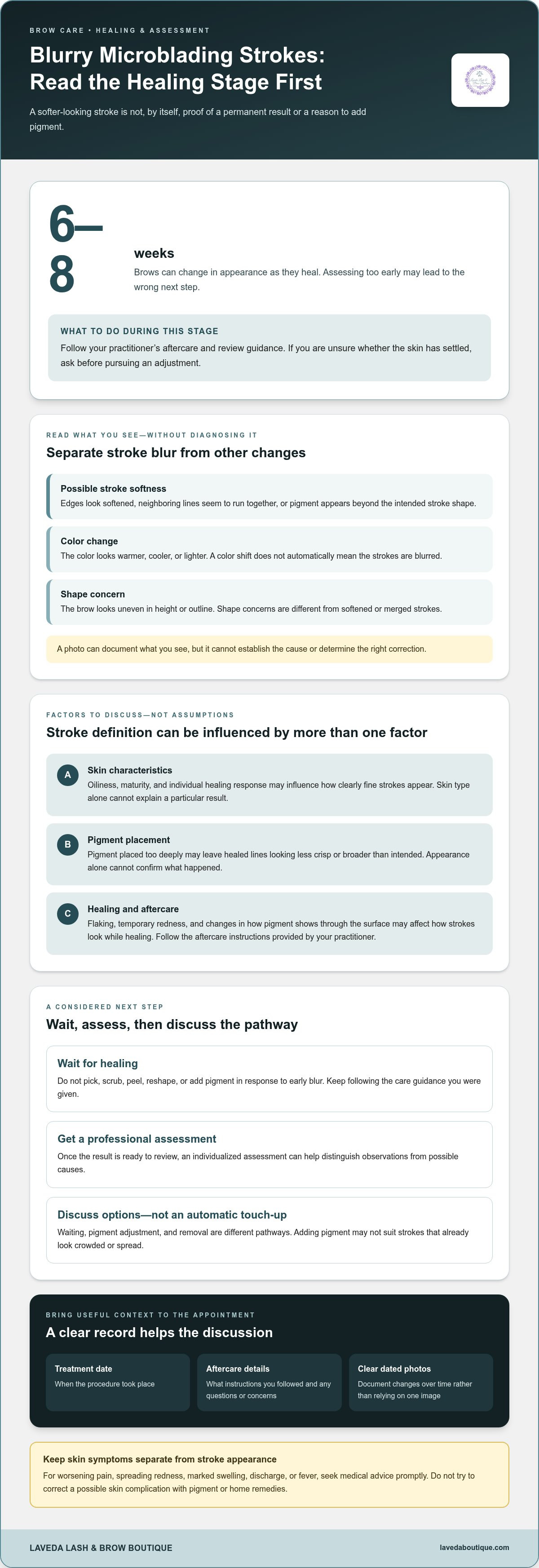
Fixing Blurry Microblading Strokes: A Safe Action Plan
A measured response protects healing skin and preserves your options. Don’t try to sharpen, cover, or remove blurry strokes yourself. Use this sequence to document what you’re seeing and prepare for a useful assessment.
Follow your aftercare plan. Stick with the instructions provided by your practitioner. Don’t pick flakes, scrub the area, or add products that haven’t been approved for your care. If you’re unsure how to handle a routine aftercare question, ask the practitioner who performed the treatment.
Document changes clearly. Take photos from the front and close up, using consistent natural lighting and a similar distance each time. Date each image. Record the procedure date, when you first noticed the blur, how the appearance has changed, and the aftercare you followed.
Avoid DIY correction. Don’t tattoo over the strokes, reshape them with tools, or apply chemical removal products at home. Don’t add pigment before the skin and existing result have been assessed. An unplanned change can make it harder to evaluate the original pattern.
Arrange a professional assessment. Bring your notes and unedited photos so the practitioner can understand the timeline, not just one moment. If the skin is still healing, follow the review guidance you were given rather than rushing into corrective treatment.
How should you document the blurred result?
Choose a well-lit spot and take front-facing and close-up photos without filters. Keep the lighting, angle, and distance as consistent as possible so the images show changes rather than differences in photography. Don’t apply makeup to conceal the area before taking a record, and don’t edit, sharpen, or alter the images. Alongside each date, note whether the strokes look softer, more connected, or unchanged.
A brief timeline adds useful context. Include the treatment date, when flaking or other healing changes occurred, when the blur first caught your attention, and any aftercare questions or accidental contact. You don’t need to interpret the cause. Specific observations help keep the discussion focused on what changed and when.
What should you avoid before a professional assessment?
Keep the area undisturbed. Don’t pick or scrub healing skin, attempt to reshape strokes, use chemical removal products, or add fresh pigment. A settled result should be assessed before corrective pigment is added. If you notice spreading redness, worsening pain, discharge, or another concerning symptom, seek medical care promptly instead of waiting for a cosmetic review.
If you’re in Washington, D.C., or Arlington, Virginia, and want to discuss your next brow-artistry step, explore Laveda’s microblading and NanoBrows services. A clear timeline and consistent photos can help make the conversation more informed.
Choosing Your Next Brow Step in Washington, D.C.
A useful next step starts with an individualized assessment, not an assumption that every blurred result needs more pigment. A practitioner can consider how the strokes have healed, the amount and placement of existing pigment, your brow goals, and whether the skin is ready for another service. That context helps shape a thoughtful conversation about what may be appropriate, including whether to wait or explore a different brow approach.
What to bring to a brow appointment
Bring information that makes the timeline and your concerns clear. This includes dated progress photos taken in consistent lighting, the date of your original procedure, and aftercare details that may help explain how healing unfolded. Describe when you first noticed the strokes looking soft or merged, and how their appearance has changed since then.
Be specific about the result you want. Explain whether your priority is a more defined shape, a softer overall look, or simply understanding the current pigment before deciding what to do. Ask for an explanation of the options that fit your brows, the purpose of each, and any limitations. This makes it easier to consider the next step without treating another pigment service as the automatic answer.
For readers seeking a Washington, D.C., or Arlington-area brow appointment, Laveda Lash & Brow Boutique offers microblading and NanoBrows. Explore Laveda’s NanoBrows Washington, D.C. guide to learn about this distinct brow technique and bring informed questions to your appointment.
How to consider another brow technique
Technique choice depends on the existing pigment, the condition of the brows, and the look you hope to achieve. Microblading and NanoBrows are different approaches to brow artistry. An overview of NanoBrows can help you understand the technique, but it doesn’t determine whether it’s suitable for brows with previous pigment. That requires an assessment of your individual starting point.
Brow lamination is a styling service, not a method for removing or correcting tattooed pigment. It may be useful to learn about as a separate option for brow styling, but don’t assume it will resolve blurred strokes. Laveda’s brow lamination Washington, D.C. guide explains this distinct service.
If you’re still weighing how to fix blurry microblading strokes, use an appointment to understand the healed result before choosing a path. Bring your photos, procedure details, aftercare notes, and questions. Then discuss a brow plan tailored to your current pigment and desired appearance with a brow specialist at Laveda, serving clients in the Washington, D.C., and Arlington area.
Choose Your Next Brow Step with Confidence
The most useful next move respects your skin’s healing and the result you want, rather than rushing into another pigment service. Bring your observations to a thoughtful brow assessment, then decide with a clearer understanding of the options. That’s a steadier way to approach how to fix blurry microblading strokes.
For clients in Washington, D.C., and Arlington, Virginia, Laveda Lash & Brow Boutique offers microblading and NanoBrows as part of its specialized brow artistry. The boutique has served more than 20,000 customers overall, across its services. Explore its brow services and consider which direction best fits your goals.
Explore Laveda’s brow services and plan your next step. Bring your questions and brow goals to Laveda Lash & Brow Boutique to discuss your next step.
Frequently Asked Questions
Can blurry microblading become more noticeable over time?
Yes, a blurred appearance can become more noticeable as pigment and surrounding skin change over time. Fading may alter contrast, making some edges or merged strokes stand out differently. That doesn’t prove the pigment has physically spread or that the original result is worsening. Compare dated photos taken in similar lighting, and have a qualified brow professional assess a persistent change rather than judging it from memory alone.
Can I wear brow makeup over healed blurry microblading?
Usually, makeup can be applied over fully healed skin if it doesn’t cause irritation, but follow any individual guidance you’ve been given. Use clean applicators and remove makeup gently; avoid rubbing or using products that sting. Don’t apply makeup over broken, irritated, or recently treated skin. If you’re unsure whether the area is fully healed, wait and ask your practitioner before covering it.
What should I do if blurry microblading is red, painful, or oozing?
Seek medical advice promptly if redness is spreading, pain is worsening, or there’s discharge. These symptoms need attention as a possible skin or infection concern, not a cosmetic correction. Don’t apply pigment, makeup, or home removal products to the area, and don’t rely on photos to decide whether treatment is needed. If symptoms feel severe or are rapidly worsening, seek urgent medical care.
Can microblading blur again after a correction?
Yes, blur can recur or remain after a correction, since healing and pigment response vary between people. A touch-up or color adjustment can add pigment, but it can’t guarantee sharper strokes, particularly if the existing pattern is already dense. Before proceeding, ask what the proposed treatment is intended to change and what limitations apply to your brows. An assessment should consider the healed result, not just the desired look.
Is saline removal suitable for every blurry microblading result?
No. Saline removal isn’t appropriate for every person or pigment pattern, and the method has limitations and potential risks. Suitability depends on factors such as the existing pigment, skin condition, treatment history, and timing. A qualified professional should explain whether this approach is reasonable for your case and what alternatives may be considered. Don’t attempt saline or other chemical removal at home.
Can NanoBrows be done over existing blurry microblading?
Possibly, but NanoBrows shouldn’t be assumed to cover or correct existing microblading. A practitioner needs to assess how much pigment remains, its placement and color, and the condition of the skin before discussing another brow technique. In some cases, adding pigment may increase visual density rather than improve definition. Bring your treatment history and clear photos so the assessment can focus on your specific starting point.
How can I take useful photos of blurry microblading for an assessment?
Take one straight-on photo of both brows and a closer image of the area of concern. Use natural, even light and repeat the same angle and distance for each update. Keep the skin free of makeup, and don’t use filters, portrait effects, or editing that changes color or sharpness. Date the images and include a brief note about what looks different. Photos help show changes, but can’t diagnose their cause.

Blurry microblading strokes can be frustrating, so it’s important to understand the cause before attempting any corrections. Consulting an experienced professional and following proper aftercare can help protect your skin and achieve better results. Brands like Lange are also worth exploring when researching beauty products and tools.