
How to Fix Bad Eyelash Extensions in Arlington, VA Safely

Bad lash extensions call for a careful correction, not a quick DIY fix. If you’re deciding how to fix bad eyelash extensions in Arlington, VA, don’t trim or pull them off yourself. Describe what feels or looks wrong to your lash artist; professional removal is the right option if you want the extensions taken off.
An uncomfortable, uneven, or overly dramatic set can be frustrating, especially when you expected a polished result. The next step depends on the issue: a style concern may call for an adjustment, while extensions that feel too heavy or irritating need careful attention.
This guide explains how to handle lash extension concerns, when to seek a professional correction or removal, and what not to attempt at home. You’ll also learn how to care for your lashes after an appointment, including how to approach moisture, heat, sweat, and saunas while protecting your set.
Table of Contents
Are lash extensions safe?
Lash extensions can cause discomfort when they’re too thick for your natural lashes. The appropriate response depends on the concern, from a style adjustment to professional removal.
Risks of Self-Removal
Pulling, peeling, or trimming extensions can tug on natural lashes and damage delicate eyelid skin. Avoid scissors, tweezers, and improvised adhesive solvents near your eyes. A professional lash artist uses a special remover to break down the bond while protecting natural lashes. Choose professional removal rather than force if extensions feel uncomfortable or you want them taken off.
Removal pricing varies by the amount of extension work and the removal approach. Ask for a quote that covers the specific service before booking. Don’t treat removal as a refill: removing existing adhesive and extensions is a different task. After removal, describe any remaining discomfort before discussing another application.
Adhesive care matters after application, too. Lash care experts advise avoiding oil-based makeup removers because they may compromise the adhesive bond. Choose a remover intended for use around the eyes, and follow your lash artist’s care instructions. Don’t rub the lash line to loosen adhesive; that can pull at extensions and natural lashes.
Choosing a Reputable Lash Technician
Prevent a poor result by discussing your preferred length, fullness, and comfort before application. Ask how the technician selects extension weight for your natural lashes, and explain any sensitivity or previous discomfort. A clear conversation helps tailor the design to your lashes rather than defaulting to a dramatic look.
For a Virginia appointment, ask about the technician’s training and any relevant credentials. Verify credentials with the issuing authority, and look for clear answers about application, adhesive, and removal. Notice whether the technician invites questions and explains aftercare, including makeup remover use. These steps help you assess the service without relying on polished photos alone.
How can you prevent bad eyelash extensions when choosing a salon or technician? Share a specific reference, discuss lash weight and desired fullness, and ask how the plan suits your natural lashes. Agree on the intended look before application begins.
When to Seek Professional or Medical Help
Contact your lash artist when extensions look uneven, feel too heavy, or differ from the agreed design. Describe what you want changed and ask whether adjustment or removal best addresses the issue. For a length concern, remember that extensions grow out; starting slightly shorter may help you assess the look as they grow.
Seek medical advice for eye or skin concerns, especially if the eyelid skin is broken or damaged. The U.S. Environmental Protection Agency explains that microorganisms can cause infections through broken or otherwise damaged skin. Avoid pulling at affected lashes while you address the concern.
How long should you wait before getting extensions reapplied after a bad set? Reapplication timing depends on the condition of your natural lashes and eyelid skin, and on whether removal or irritation caused damage. Wait until the area is comfortable and intact before considering another application.
How can I safely fix bad eyelash extensions at home?
If you’re deciding how to fix bad eyelash extensions in Arlington, VA, start by identifying the specific issue rather than altering the set. Look in a mirror and note whether the concern is uneven placement, excess length, discomfort, or a loose extension. This distinction helps you explain the problem clearly and avoid making a style concern worse through guesswork.
Take a clear photo of each eye in good lighting. Compare the shape and fullness, then note which area looks different. For example, you might notice one extension crossing another or one side appearing fuller. Share these observations with your lash artist and describe the result you wanted. A specific description is more useful than saying only that the set looks bad.
Keep your hands away from the lash line. Don’t pull, peel, or trim extensions yourself; scissors can cut natural lashes, and pulling can tug at them. Avoid improvised methods, including tweezers or household solvents. They can make it harder to assess the original issue and may irritate the delicate area around your eyes.
If one extension feels loose, resist the urge to remove it. Note its location and whether it catches when you blink, then tell your lash artist. Don’t tug at it to test the bond. A professional can assess whether the extension needs adjustment or removal without you altering nearby lashes.
Natural lashes shed as part of their growth cycle. Deka Lash states that people typically shed 1-3 natural eyelashes per day. A stray extension may appear during ordinary shedding, but avoid pulling it to determine what is attached. Let the lash artist assess the area if you can’t tell whether an extension has loosened or your natural lash has shed.
A practical approach to how to fix bad eyelash extensions in Arlington, VA begins with a clear follow-up message. Include your appointment date, the specific area, what feels uncomfortable, and a photo if available. State whether you want a less dramatic look, a correction, or removal. Don’t book another application before explaining the concern with the current set.
For a polished result, use professional input rather than home alterations. A professional lash extension assessment can help you address a style concern without experimenting near your eyes.
Don’t trim lash extensions yourself, as scissors may cut your natural lashes. Leave any correction or removal to a professional.
When should I see a lash technician or doctor for bad eyelash extensions?
Use the type of concern to choose your next step. A style problem, such as uneven length or crossed extensions, belongs with a lash technician. Eye pain, significant irritation, or damaged eyelid skin calls for medical advice. Don’t try to solve either problem by pulling extensions or applying a product near your eye.
Contact your lash technician when the set feels too heavy, looks different from the agreed design, or catches against neighboring lashes. Explain what changed and where you notice it. For example, describe whether the inner corners look uneven or one extension feels uncomfortable when blinking. A clear description helps the technician understand whether the issue involves placement, length, or comfort.
Choose medical care for symptoms involving the eye or eyelid, rather than treating them as a routine beauty adjustment. Examples include ongoing redness, swelling, pain, unusual discharge, or changes in vision. These concerns need assessment by a medical professional. Don’t wait for a lash appointment to address an eye symptom, and don’t use tweezers or remover around an irritated area.
Broken or damaged skin deserves particular attention. The U.S. Environmental Protection Agency explains that microorganisms can cause infections through broken or otherwise damaged skin. Avoid touching the affected area, and seek medical guidance if the skin is injured or signs of irritation develop. A lash technician can address the extensions, but medical concerns require medical care.
Style concern: Contact the technician who applied the set and describe the specific change you want.
Loose or uncomfortable extension: Avoid tugging it; explain its location and sensation to the technician.
Eye or skin symptoms: Seek medical advice, especially for pain, swelling, discharge, or vision changes.
Before contacting a technician, note when the concern began and whether it is getting worse. Take a photo in clear light if it shows an uneven area. Share the appointment date, the location of discomfort, and whether blinking or touching the area changes the sensation. These details keep the conversation focused and help distinguish a design correction from a health concern.
Keep the two routes separate. A technician can discuss adjustment or professional removal for an unsatisfactory set. A doctor or other medical professional should assess eye symptoms or damaged skin. If both issues occur, address the medical concern first, and avoid further manipulation until you’ve received guidance.
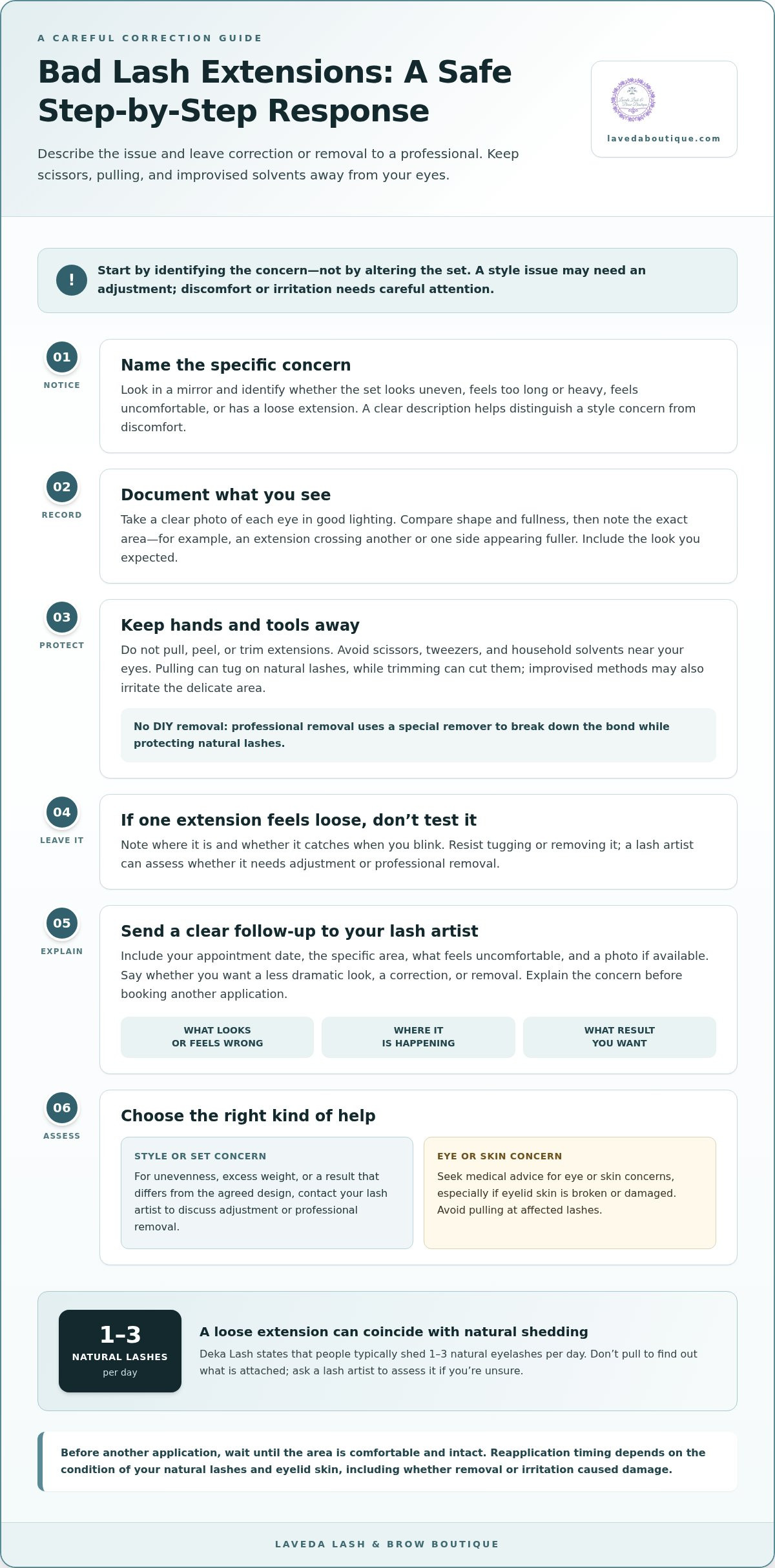
What are the risks of pulling off or removing eyelash extensions yourself
Pulling an extension can tug on the natural lash attached to it. Trimming creates a different risk: scissors may cut your natural lashes. A quick fix can therefore leave the original set uneven while damaging lashes you wanted to preserve. Stop if an extension catches, twists, or feels uncomfortable. Don’t use tweezers to test whether the adhesive has loosened.
DIY removal also makes it difficult to separate extensions from natural lashes safely. A professional lash artist uses a special remover to break down adhesive. Pulling before the bond has been broken puts tension on the lash line. Don’t substitute household solvents or attempt to dissolve adhesive with products near your eyes.
Damaged eyelid skin is another concern. The skin around the eyes is exceptionally delicate and prone to tearing or inflammation when subjected to aggressive pulling. Avoid scratching or picking at the lash line, especially if it’s already irritated or injured. If skin is damaged, focus on medical guidance rather than trying another removal method.
Use this quick check before touching a troublesome extension:
Extension looks uneven: Take a clear photo and describe the area to your lash artist.
Extension feels loose: Don’t pull it to see what comes away.
Extension crosses another lash: Leave it in place for professional assessment.
Skin appears damaged: Avoid manipulating it and seek appropriate medical guidance.
Oil-based makeup remover isn’t a safe shortcut. Experts advise avoiding oil-based removers because they may compromise the adhesive bond. A weakened bond doesn’t mean an extension is ready to be pulled off. Rubbing the lash line can still tug at attached natural lashes, so follow your lash artist’s aftercare guidance instead.
If you’ve already pulled at an extension, stop rather than removing more. Note which area you touched and whether the skin appears damaged. Share those details with your lash artist at Laveda Lash & Brow Boutique so they can assess the remaining set and discuss professional removal. If skin injury is involved, seek medical advice before further manipulation.
Choose professional removal when you want the set taken off. The artist can use the appropriate remover to break down adhesive instead of relying on force. This avoids the specific risks of cutting natural lashes with scissors or tugging at them by hand. Leave the adhesive intact until removal can be handled professionally.
If you’re unhappy with how your lash extensions look or feel, contact your lash artist and describe what you want changed. Be specific about the part of the set that concerns you and the result you would prefer, rather than trying to correct it yourself. Explain whether your concern is about a particular area or the overall look, and ask to discuss a change before touching or removing any extensions. A clear description keeps the conversation centered on your preferences, not an at-home fix.
Keep your request focused on what you want adjusted. If you’re unsure how to describe it, use simple words and identify the area that concerns you when speaking with your lash artist at Laveda Lash & Brow Boutique. You can also explain what you’d like the finished look to be. There’s no need to pull at an extension to demonstrate the problem; describe the concern directly and say what change you’re seeking.
How to Find a Licensed Lash Technician in Virginia
For a Virginia appointment, verify credentials and assess how the technician approaches your specific lash needs. Ask which license or credential applies to their work, who issued it, and how you can verify it. Don’t assume a polished portfolio or salon setting proves professional qualifications.
Use a simple verification process before booking:
Ask the technician to identify the relevant credential and issuing authority.
Look up the credential through the issuer’s official verification tool, if available.
Compare the listed name with the technician’s name.
Ask about training specific to lash extensions and safe removal.
Then assess the service itself. A good consultation covers your preferred length and fullness before extensions are applied. Bring a reference photo, and explain whether you want a subtle result or more volume. Ask how the proposed design suits your natural lashes. Clear answers show that the consultation considers your goals instead of treating every set alike.
Review examples of the technician’s work, focusing on consistency across different clients. Look for sets that appear even from inner corner to outer corner, with a finish that matches the stated style. A single dramatic photo can’t show how the technician handles varied requests. Ask to see examples closer to your desired length or fullness.
Discuss the appointment process before it begins. Ask what the technician will do if an extension feels uncomfortable, the placement looks uneven, or you later want removal. Listen for a direct explanation of the correction process and aftercare. The technician should be able to distinguish a style adjustment from removing extensions.
Clear, specific communication matters. Share any previous reaction or discomfort, and note the areas where a past set felt too heavy. Ask how the technician plans to adapt the design. If your concern is a bad prior application, explain what you want changed rather than relying only on a photo.
Before choosing, compare the credential information, consultation, portfolio, and answers about removal. No single signal establishes quality; look for consistency between what the technician says and how they plan your service. If the conversation leaves you unclear about the design or correction process, pause before proceeding.
Ready to discuss your desired look with a lash professional? Book a lash extension appointment and share your preferred style and any concerns about a previous set.
Laveda Lash & Brow Boutique: Lash Extensions
Laveda Lash & Brow Boutique offers Lash Extensions for readers ready to plan a new set after addressing a disappointing result. Share what felt wrong, such as excess length, uneven fullness, or discomfort, and describe the look you want instead. Clear preferences help shape a more considered appointment conversation.
Book a Lash Extensions appointment when you’re ready to discuss a fresh design. If your eyes or eyelid skin remain irritated or damaged, seek medical guidance before another application. Brow Lamination is also available as a complementary beauty service.
Contact Laveda Lash & Brow Boutique or visit the website to take the next step.
Choose Your Next Lash Look With Confidence
A disappointing set can help clarify what you want from your next appointment. Consider which detail matters most: a softer length, balanced fullness, or a different overall beauty routine. To discuss how to fix bad eyelash extensions in Arlington, VA, focus on the result you want and any concerns from your previous set.
Laveda Lash & Brow Boutique offers Lash Extensions, Lash Lift, and Mani Pedi services. Choose the lash option that best fits your preferences, and share your goals before your appointment. Clear expectations create a useful starting point for discussing your look.
Take the next step at your pace. Contact Laveda Lash & Brow Boutique to discuss your beauty appointment. A thoughtful choice can help you move forward feeling prepared and confident.
Frequently Asked Questions
How do professionals remove damaged or poorly applied eyelash extensions?
A lash professional assesses the set and decides whether adjustment or removal suits the concern. For removal, a professional lash artist uses a special remover to break down adhesive without harming natural lashes. Before the appointment, describe which areas feel uncomfortable or look uneven, and explain your preferred result. This helps focus the assessment on the problem rather than treating the entire set as a style issue.
How much does eyelash extension removal or a correction appointment cost in Arlington, VA?
The price depends on the case and is given after a quote request; cost factors include the amount of extension work and whether you need removal or a correction. Describe what was applied, what you want changed, and whether you want the set removed or adjusted. Those details help clarify the service being quoted. Avoid comparing removal and correction as though they involve identical work.
Which Arlington, VA lash salons offer eyelash extension removal or correction?
Laveda Lash & Brow Boutique proudly serves Arlington, Virginia clients right from our local studio, featuring convenient parking options. For a concern with an existing set, explain the specific issue and desired outcome when discussing your lash appointment. For example, say whether you want a softer look or need help with uneven placement. This keeps the conversation centered on your needs without assuming every extension appointment includes the same service.
What should I do if eyelash extensions cause irritation, swelling, or an allergic reaction?
Stop touching or manipulating the lash line, and seek medical advice about irritation, swelling, or a suspected allergic reaction. Note when symptoms began and any products used around your eyes, then share those details during your medical assessment. Don’t try to remove extensions yourself while the area is irritated. A lash-style adjustment is not a substitute for medical guidance about eye or skin symptoms.
Comments