
BIAB Nail Prices and Appointment Length in Washington, DC

Updated: Oct 31
A BIAB manicure isn’t priced or timed by the overlay alone. For BIAB nails in Washington, DC, the service details shape the quote and appointment length. Preparation, existing product removal, and your chosen finish all affect how much work is involved.
If you’re weighing cost against time in the chair, both deserve a clear answer. Builder gel overlays add a reinforcing layer over natural nails, making them different from a standard polish manicure.
Here, you’ll learn what affects BIAB pricing and appointment length, how the overlay process works, and which details can shape your visit. You’ll also see how to think about natural-nail support and what to consider when choosing a manicure that fits your goals.
Table of Contents
BIAB manicure pricing and appointment length
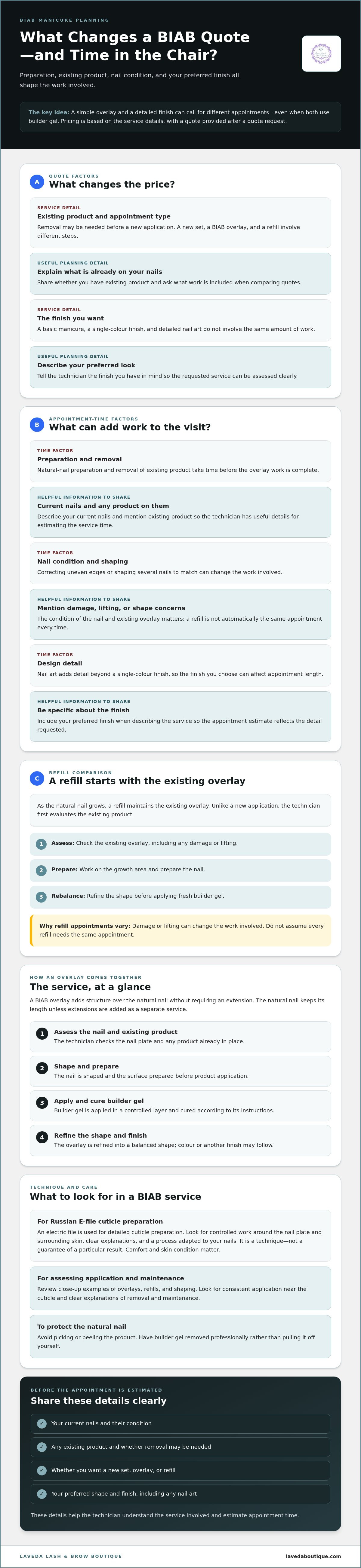
For BIAB nails in Washington, DC, the service details shape both the quote and time in the chair. A manicure may involve natural-nail preparation, builder gel application, shaping, and your chosen finish. Existing product, nail condition, and design complexity can change the work involved. A simple overlay and a detailed finish call for different appointments, even when both use builder gel.
The price depends on the service details and is provided after a quote request. Key factors include whether existing product needs removal, whether you’re booking a new set or refill, and the finish you want. A basic manicure, a BIAB overlay, and a refill involve different steps. When comparing quotes, ask what work is included in each service.
Appointment length depends on similar details. Preparation and removal take time, as can correcting uneven edges or shaping several nails to match. Nail art adds detail beyond a single-colour finish. When requesting an appointment, describe your current nails, any existing product, and your preferred finish. This gives the technician useful details for estimating the service time.
A BIAB refill maintains an existing overlay as the natural nail grows. The technician assesses the product, prepares the growth area, and balances the shape before applying fresh builder gel. Unlike a new application, a refill begins with evaluating the existing overlay. Damage or lifting can affect the work involved, so don’t assume every refill is the same appointment.
Russian E-file manicures use an electric file for detailed cuticle preparation. The technique requires controlled work around the nail plate and surrounding skin. Look for a technician who explains the preparation, works carefully, and adapts the process to your nails. An e-file manicure is a technique, not a guarantee of a particular result. Your comfort and the condition of your skin matter during the service.
When choosing a BIAB nail technician in DC, review close-up examples of overlays, refills, and shaping. Look for consistent application near the cuticle and clear explanations of removal and maintenance. During wear, avoid picking or peeling the product, which can disturb the natural nail. Book professional removal and ask the technician to remove the builder gel rather than pulling it off yourself.
Natural nail strength and growth
A BIAB overlay adds a firm layer over natural nails, helping them resist everyday bending and minor knocks. It doesn’t make nails grow faster. Your nails continue growing beneath the product, so visible length depends on your natural growth and how carefully you protect the free edge. Typing, opening packages, or lifting objects with your nails can put pressure on the tips. Treat nails as part of your hands, not as tools, even with builder gel in place.
Possible downsides include lifting, snagging, and damage if the product is peeled off or removed with aggressive filing. A lifted edge can catch on clothing, while forceful removal may strip or thin the natural nail surface. Keep the overlay intact between appointments, and have removal handled with controlled filing or the method appropriate for that product. If a nail feels painful or the surrounding skin looks irritated, pause further product application and seek suitable care.
Good adhesion starts with preparation. The technician shapes the nail, removes surface residue, and prepares the plate before applying product. Oil, moisture, or remaining product can interfere with a clean application, while excessive filing can weaken the nail surface. If you avoid a particular ingredient, name it before the service and ask which product will be used. This conversation helps you make an informed choice without assuming every builder gel has the same formula.
Waterless nail care avoids soaking hands in a basin as part of manicure preparation. That can suit clients who prefer dry cuticle work and keeps the appointment focused on nail preparation rather than a soak. Traditional salons can use up to 270 gallons of water per chair each day. Traditional salons can use nearly 100,000 gallons of water per chair each year. A waterless approach changes the service process, but careful nail preparation and clean tools remain central to product adhesion.
For a Downtown Washington, DC appointment, consider the route as well as the service. A short walk from work may make a maintenance visit easier to schedule, while driving can make parking and travel time relevant. Ask about the manicure steps, product removal, and ingredient options when planning. To explore manicure care, review manicure service details and choose the appointment that fits your nail goals.
BIAB (builder gel) overlays
A BIAB overlay places builder gel over the natural nail to add structure without requiring an extension. The finished nail keeps its natural length unless extensions are added as a separate service. If your nails bend or snag at the free edge, the added layer can create a more substantial feel. It sits on top of the natural nail and grows out with it.
Application starts with an assessment of the nail plate and any existing product. The technician shapes the nails, prepares the surface, and applies builder gel in a controlled layer. The product is cured according to its instructions, then refined into a balanced shape. A colour or finish may follow, depending on your preferred look. Each step affects the final contour, from a softly rounded edge to a squarer silhouette.
Structure matters. Too much bulk near the cuticle can look uneven, while insufficient support at the stress area may leave the edge feeling less stable. A balanced overlay follows the nail’s shape and keeps product clear of the surrounding skin. Ask to see the shape from the side as well as above. That view helps you assess the profile, thickness, and alignment before the finish is complete.
Maintenance means paying attention as your natural nail grows. The product moves forward with the nail, gradually changing the area near the cuticle. A refill can restore the overlay’s balance, while a fresh application may make sense when the existing product needs broader attention. Don’t lift, bite, or peel an edge. These actions can disturb the natural nail and make its surface harder to assess.
Removal should match the builder gel used. Some products are filed down; others may require a different process. A technician can identify the product and remove it without pulling at the natural nail. If you’re comparing BIAB nails in Washington, DC, consider how each salon explains overlay shaping, maintenance, and removal. Clear details help you choose a finish that suits your natural length and everyday routine.
Which Washington, DC BIAB salons have the best reviews?
For BIAB, useful reviews describe the service itself, not just the finished look. Look for comments about builder-gel application, shaping, refills, and removal. A review saying “my neutral overlay looked smooth” gives more practical detail than a general compliment. Reviews that name the service also help distinguish BIAB experience from feedback about a different manicure.
Look beyond the overall rating. A high score alone doesn’t show whether the reviewer booked BIAB, had a refill, or chose another service. Seek specific observations: Was the nail shape even? Did the technician explain the process? Did the finish match the request? Several detailed comments can tell you more than a short rating without context.
Consider how reviews describe communication and appointment flow. A client might mention that the technician discussed existing product before starting, explained the planned shape, or clarified removal. These details show what the appointment felt like without guaranteeing the same experience for everyone. Comments about unexpected changes to the design or service can also indicate whether expectations were discussed clearly.
Consider the date and pattern of feedback together. A recent review can describe a current visit, while older comments may reflect a different team or process. Look for recurring details across separate reviews, such as clean shaping or careful cuticle work. Treat an unusually enthusiastic or critical comment as one person’s account, then compare it with other BIAB-specific experiences.
Photos add useful context when they show the nails clearly. Check whether an image displays the cuticle area, side profile, and free edge rather than only a distant hand pose. A close-up of a sheer overlay, for example, may show product thickness and how neatly the finish follows the natural nail. Photos can’t show durability or removal technique, so consider them alongside written feedback.
Use a focused review check before booking:
Find feedback that names BIAB or builder gel specifically.
Compare comments about overlays, refills, shaping, and removal.
Look for repeated descriptions of communication and finish quality.
Read both positive and critical accounts for concrete service details.
Use photos to assess visible application, not lasting wear.
Choose the salon whose BIAB reviews match your priorities. If you want a natural-looking overlay, focus on comments and images showing that finish. If you need a refill, look for feedback about maintenance work. This approach helps you assess Washington, DC options without treating a star score as proof of a particular result.
What is BIAB, and how does it compare with gel or acrylic nails?
BIAB means “builder in a bottle,” a name used for builder-gel products. A BIAB manicure applies a structured gel layer over the natural nail rather than relying on polish alone. The aim is a shaped overlay that preserves your own nail length. For example, a short natural nail can have a sheer BIAB layer without an extension.
Gel polish and BIAB both use gel, but serve different purposes. Gel polish typically adds colour and a cured finish, while builder gel creates more structure over the nail. A thin colour layer may suit someone prioritizing a glossy shade; BIAB may better suit someone seeking a firmer overlay. The exact product and application can vary by salon.
Acrylic nails use a different enhancement system, commonly combining liquid and powder to form a sculpted product. Acrylic can create extensions and longer shapes. BIAB overlays generally focus on reinforcing the natural nail, though each salon’s techniques and products shape the final service. Compare the length you want first: a natural-length overlay and an extended acrylic set are different requests.
BIAB: builder gel applied as a structured overlay.
Gel polish: a coloured gel finish with less emphasis on building structure.
Acrylic: a sculpted enhancement system that can create added length.
Choose based on the result you want, not the product name alone. If you prefer your natural length and want added structure, ask about a BIAB overlay. If colour is your priority, gel polish may suit you with a different application. If you want a more pronounced extension, discuss acrylic and the length and shape you have in mind.
Product labels don’t tell the whole story. Before choosing BIAB nails in Washington, DC, describe your current nail length, preferred shape, and whether you want colour or extensions. Ask how the chosen product is applied, maintained, and removed. This conversation helps match the service to your preferences and avoids treating different enhancement systems as interchangeable.
Consider removal, too. Builder gel, gel polish, and acrylic may require different removal methods. Don’t peel or force product from the nail; removal technique matters to the natural surface. A professional can identify the product and use an appropriate process. For a classic manicure alongside your nail-care plans, explore manicure options.
Laveda Lash & Brow Boutique: Lash Extensions
Laveda Lash & Brow Boutique offers manicure and pedicure services at its Washington, DC locations, alongside lash and brow services. If you’d like to pair nail care with a defined lash look, consider Lash Extensions as a separate service with its own desired effect and upkeep. Brow Lamination is another option for a polished brow appearance. These services complement a broader beauty routine but don’t replace a BIAB manicure or answer questions about builder-gel application. Choose the appointment that matches your goals, whether that’s nail care, enhanced lashes, or more defined brows. Contact Laveda Lash & Brow Boutique to plan your beauty appointment.
Plan Your Next Appointment With Intention
Let your nail goals guide your next appointment. If you’re considering BIAB nails in Washington, DC, decide whether you want to keep your natural length, add colour, or change your shape. Share that preference clearly so the service can be planned around the finish you have in mind. A deliberate choice makes it easier to match the appointment to your routine, whether you prefer a simple, understated look or a more defined style.
For other beauty appointments, Laveda Lash & Brow Boutique offers Mani Pedi services, Lash Extensions, and Lash Lift. Choose the service that suits your plans, then contact Laveda Lash & Brow Boutique to take the next step. A considered appointment is a confident way to care for your personal style.
Frequently Asked Questions
Which salons in Washington, DC offer BIAB nails?
Laveda Lash & Brow Boutique offers BIAB nail services at its Washington, DC locations. The 14th Street and Georgetown locations provide nail services, so consider which is more convenient for your plans. For BIAB nails in Washington, DC, compare examples of salon work, including close-up views of the cuticle area and nail profile. These details help you assess shaping and finish before choosing an appointment.
What determines BIAB manicure pricing in Washington, DC?
The price depends on the service details and is provided after a quote request. A new overlay, a refill, and a service that includes existing-product removal involve different work. Nail length, the condition of the existing product, and your chosen finish can also affect the quote. Describe the result you want, such as a natural-length overlay with a single-colour finish, to make your request specific.
How long does a BIAB manicure take and how long does it last?
Appointment time depends on preparation, removal, shaping, and the finish. A straightforward overlay differs from a visit involving existing product or detailed nail art, so allow time for all the steps. Wear also varies with nail growth, daily use, and product maintenance. Repeated pressure on the free edge, for example, can affect how the manicure wears. A refill addresses the visible growth area.
How much does BIAB infill or removal cost in Washington, DC?
The price depends on the work required and is provided after a quote request. For a refill, the technician needs to assess the existing overlay and natural nail growth. Removal depends on the product and the work involved. When describing the service, include whether you have builder gel on your nails and whether you want a refill or removal. That distinction helps clarify what the appointment involves.
Do Washington, DC salons require appointments for BIAB nails?
Appointment policies vary by salon, so there isn’t one rule for Washington, DC. Booking ahead is a practical way to plan a BIAB nails in Washington, DC appointment around the service you need. Use the salon’s booking options to choose a time and specify whether you want a new overlay, refill, or removal. Naming the service helps the appointment reflect the work you have in mind.


Comments