
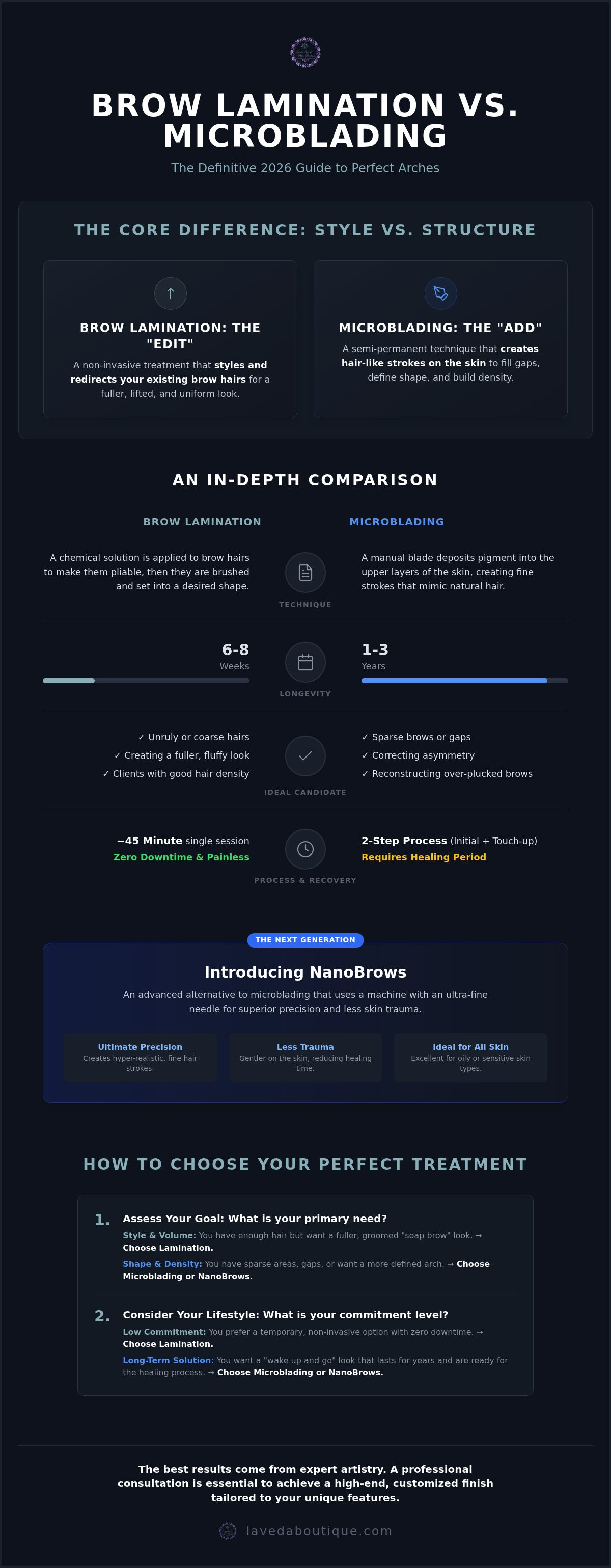
Brow Lamination vs Microblading: 2026 Comparison Guide

The perfect brow is no longer a matter of luck or a twenty-minute morning routine; it is a result of precision artistry. You likely feel the daily frustration of trying to sketch symmetrical arches only to worry about how they will look by noon. Choosing between brow lamination vs microblading often feels like a high-stakes gamble with your face, especially when you are unsure which technique suits your specific skin type or lifestyle. You want a solution that offers a sophisticated look without the fear of a permanent mistake.
This 2026 guide clarifies the critical differences between these two leading treatments to help you secure the best return on your beauty investment. As consumer preferences shift toward natural and reversible aesthetics, understanding these procedural nuances is essential. We will compare the styling power of lamination against the hair-mimicking depth of microblading. You will also discover why elite clients in Washington DC and Arlington trust Laveda Lash & Brow Boutique for high-end, customized results that prioritize both safety and professional excellence.
Table of Contents
Brow Lamination vs. Microblading: Understanding the Core Differences
Deciding between brow lamination vs microblading begins with a simple distinction: are you looking to edit the hair you already have, or do you need to add hair that isn't there? This "Add vs. Edit" rule is the most efficient way to categorize these treatments. Lamination is an editorial refinement. It manipulates your natural brow hairs to maximize their surface area and impact. Microblading is a structural reconstruction. It builds a permanent-looking foundation where hair is sparse, thin, or entirely missing.
What is Brow Lamination?
Brow lamination is a chemical process that redirects and sets your natural brow hairs into a uniform, sleek shape. The treatment uses a lifting solution to break down the internal hair bonds, allowing the specialist to brush them into a fuller, "fluffy" position. A setting lotion then reforms those bonds to lock the hair in place. It's the ultimate solution for achieving the high-fashion "soap brow" look without the daily mess of waxes or gels. Because it's a non-invasive service, you'll experience zero downtime and a completely painless appointment. It's best suited for clients who have decent hair density but struggle with unruly growth patterns or a lack of volume.
What is Microblading?
Microblading is a sophisticated form of non-surgical eyebrow restoration. It utilizes a manual blade to deposit pigment into the upper layers of the skin, creating crisp, hair-like strokes that mimic natural growth. While lamination works with the hair, microblading works with the skin. It's the professional standard for filling gaps, correcting long-standing asymmetry, or reconstructing arches after years of over-tweezing. This is a semi-permanent tattooing technique that requires a two-step process. After your initial session, you'll return for a touch-up in six to eight weeks. This second visit is crucial for refining the shape and ensuring the pigment remains vibrant and true to tone.
Choosing between brow lamination vs microblading ultimately depends on your existing brow health and lifestyle. The primary goals of these services cater to different aesthetic needs. If you want texture and a lifted, vertical look, lamination is your best fit. If you require density, shape correction, and a "woke up like this" foundation that lasts for months, microblading is the superior choice. Many clients at Laveda Lash & Brow Boutique start with a consultation to see if their natural hair can achieve their goals through lamination before committing to the deeper pigment work of microblading.
The Technique Deep Dive: How Each Service Transforms Your Arches
Mapping is the blueprint of beauty. Before any chemicals or pigments touch your skin, a specialist uses precise measurements to outline your ideal arch. This ensures facial symmetry and a result tailored to your unique bone structure. While the end goals of brow lamination vs microblading differ, both rely on this foundational artistry to succeed. Professional mapping prevents the "one-size-fits-all" look, ensuring your brows complement your specific facial features.
The Lamination Process: 45 Minutes to Fluffy Brows
The lamination journey is efficient and highly effective. First, your specialist cleans and primes the brow area to remove any oils or residue. This step is critical for maximum chemical absorption. Next, a lifting cream is applied. Your hairs are then brushed into a deliberate, upward position to create that sought-after "fluffy" effect. This solution breaks down the hair's internal bonds so they can be reshaped. Finally, a neutralizing solution is applied to reform those bonds; this is followed by a keratin-rich treatment. This final step nourishes the hair, leaving it healthy, shiny, and perfectly set for weeks.
Microblading and NanoBrows: Precision Pigment Placement
When moving beyond surface styling, precision is everything. Microblading utilizes a manual hand tool to etch fine, hair-like strokes into the skin. A critical part of this process is custom pigment matching. Your artist selects shades that harmonize with your natural hair color and skin undertones. For those seeking the latest innovation, NanoBrows offer a next-generation alternative. Unlike traditional microblading, NanoBrows use a specialized machine with a single, ultra-fine needle. This technique allows for even greater depth control and less skin trauma, making it an excellent choice for sensitive or oily skin types.
Safety is the cornerstone of high-end service. Always review FDA information on permanent makeup safety to understand the standards required for pigments and sterile procedures. Professional artistry ensures these strokes don't blur over time. If you want to see which technology best suits your aesthetic, book a consultation with a brow specialist to explore your options in person. Successful results depend on the artist's ability to manage depth and spacing, ensuring your new brows look authentic rather than manufactured. Whether you choose the chemical lift of lamination or the precision of NanoBrows, the focus remains on enhancing your natural beauty with expert care.
Longevity, Maintenance, and Investment: The Practical Comparison
Understanding the investment behind brow lamination vs microblading involves looking at both your calendar and your daily routine. While one offers a quick, temporary lift, the other provides a semi-permanent foundation. Choosing the right service requires balancing the initial time in the chair with the longevity of the results. Your choice should reflect how much time you want to save during your morning makeup application.
How Long Do the Results Last?
Lamination results typically stay vibrant for 6 to 8 weeks. This timeline aligns with your natural hair growth cycle. As your brow hairs shed and new ones grow in, the chemical lift gradually fades. To extend this look, apply a nourishing brow oil nightly to keep the hair flexible and healthy.
Microblading offers a much longer horizon, generally lasting between 12 and 18 months. The exact duration depends on your skin type, metabolic rate, and lifestyle factors like sun exposure. Oily skin may require more frequent touch-ups to maintain crisp strokes. Protecting your brows with high-quality SPF is the most effective way to prevent pigment fading over time.
Pain Levels and Aftercare Requirements
The experience during the appointment differs significantly between the two. Lamination is entirely painless and non-invasive. Your primary constraint is a strict 24-hour 'no water' rule immediately following the service. This allows the chemical bonds to set completely without interference.
Specialists apply a high-grade numbing cream during microblading to ensure a comfortable experience, though you may feel mild discomfort. The healing phase is more involved, requiring a 7 to 10 day dry-healing period. During this time, you must avoid heavy sweating, swimming, and direct water contact to allow the pigment to settle into the upper dermis. If you are planning a complete aesthetic update, you might also compare Lash Lift vs Lash Extensions to streamline your boutique visits.
Deciding between brow lamination vs microblading often comes down to your desired maintenance level. A 45-minute lamination session provides immediate gratification, while a two-hour microblading appointment secures your look for over a year. Consider your upcoming travel plans and professional schedule when booking. This ensures you can follow the necessary aftercare protocols for the best possible results.
The Selection Guide: Which Treatment Suits Your Skin and Lifestyle?
Skin biology is the silent architect of your brow success. While aesthetic preference matters, your skin type determines the longevity and clarity of the results. The brow lamination vs microblading debate often centers on the final look, but the underlying foundation is what keeps that look intact over time. Choosing the wrong service for your skin type can lead to premature fading or blurred results.
Best for Oily Skin or Large Pores
Traditional microblading often struggles with oily skin types. High sebum production can cause manual strokes to blur or "fan out" over time, leading to a loss of definition. For these clients, brow lamination is a safer bet because it focuses entirely on the hair rather than the skin. It provides a fuller look without the risk of pigment migration. If you require a semi-permanent solution but have active oil production, NanoBrows are the superior alternative. NanoBrows utilize a precise machine technique that deposits pigment more effectively in oily environments, ensuring the strokes remain crisp and distinct despite skin oiliness.
Best for Sparse or Over-Plucked Brows
If your goal is to build a brow where no hair exists, microblading is the industry standard. Lamination requires existing natural hair to redirect; it cannot fill large gaps or reconstruct a missing tail. For those with significant thinning or over-plucked arches, the structural addition of pigment is necessary to create a balanced face. Some clients opt for a "Hybrid" approach. This involves using NanoBrows to create a structural foundation and lamination to style the remaining natural hair for a multidimensional, realistic finish.
Your daily habits also influence the brow lamination vs microblading choice. High-intensity athletes who sweat daily may find that lamination requires more frequent maintenance, as consistent moisture can soften the chemical lift. Conversely, frequent sun exposure can prematurely fade microblading pigments if you don't use adequate protection. Consider your commitment level: lamination serves as a low-risk trial for a new shape, while microblading represents a long-term transformation for your facial structure. To receive a professional assessment of your skin type and hair density, book a consultation at Laveda Lash & Brow Boutique to ensure you choose the service that yields the best results.
Expert Artistry at Laveda Lash & Brow Boutique
Precision is the hallmark of a premier beauty experience. When you decide between brow lamination vs microblading, the skill of your technician is the most significant variable in your final result. A general salon may offer these services as additions to a long menu, but a specialized boutique focuses entirely on the artistry of the face. This specialization ensures that every stroke and chemical application meets a higher standard of excellence and safety.
Laveda Lash & Brow Boutique operates with the quiet confidence of a seasoned industry leader. Our approach centers on customized brow mapping, a process that treats your facial structure as a unique canvas. We don't believe in templates. Instead, we use professional measurements to find the exact arch height and tail length that complements your features. This methodical flow ensures that whether you choose a temporary lift or a semi-permanent transformation, the outcome feels authentic to you.
The Laveda Difference: 20,000+ Satisfied Clients
Since 2018, we have served over 20,000 satisfied customers across the DMV area. This track record reflects our commitment to professional standards and a luxury service environment. Our specialists maintain deep expertise in NanoBrows, traditional Microblading, and Brow Lamination Washington DC. We understand that the choice between brow lamination vs microblading can be complex, which is why we prioritize the consultation phase.
A professional consultation is the only way to be 100% sure of your choice. During this session, we analyze your skin's oil production, your natural hair density, and your daily skincare routine. We provide honest, expert advice on which service will offer the best return on your investment. This transparency builds the trust necessary for a successful high-end beauty partnership.
Book Your Appointment in Washington DC or Arlington
We provide two convenient boutique locations to serve busy professionals in the city and the suburbs. You can find our expert teams at our 14th St NW location in Washington DC or our boutique in Arlington, VA. Our booking process is streamlined and direct, respecting your time from the moment you schedule your visit to the final reveal of your new arches.
Don't settle for "good enough" when it comes to your facial symmetry. Experience the difference that specialized artistry and premium care can make for your confidence. Book your brow consultation at Laveda Lash & Brow Boutique today and take the first step toward effortless, elite brows.
Secure Your Ideal Arch with Expert Guidance
Deciding between brow lamination vs microblading is the first step toward reclaiming your morning routine. Whether you choose the immediate, non-invasive lift of lamination or the long-term structural density of microblading, your success depends on professional artistry. Your skin type and lifestyle are the primary drivers of result longevity. Oily skin types benefit from the precision of NanoBrows, while those with natural volume can achieve a runway-ready look through chemical redirection.
As a premier DC boutique since 2018, Laveda Lash & Brow Boutique has helped over 20,000 satisfied clients navigate these choices with confidence. Our specialists in NanoBrows and lamination ensure that every service is tailored to your unique facial symmetry. Don't leave your results to chance with a generalist salon that lacks specialized focus.
Book Your Professional Brow Consultation at Laveda Lash & Brow to receive an expert assessment of your needs. We look forward to helping you wake up every day with effortless, high-end results that enhance your natural beauty.
Frequently Asked Questions
Can I get brow lamination if I have very sparse eyebrows?
Lamination works by redirecting your natural hair, so it isn't the best choice for very sparse eyebrows. If you have significant gaps, the treatment won't have enough surface area to create a full look. In these cases, we recommend NanoBrows or microblading to build a realistic foundation. These services add the appearance of hair where it is missing, whereas lamination only styles what you already have.
Does microblading hurt more than brow lamination?
Microblading involves a higher level of discomfort because it is a semi-permanent tattooing technique. We use a high-grade numbing cream to minimize sensation during the procedure. In contrast, brow lamination is entirely painless and non-invasive since it only involves chemical solutions applied to the hair. Most clients describe microblading as a light scratching sensation, while lamination feels like a standard hair treatment or a brow tint.
Is brow lamination safe for sensitive skin?
Brow lamination is generally safe for most skin types, but those with extreme sensitivity should proceed with caution. The lifting and setting solutions are chemical based, which can occasionally cause redness or irritation. We recommend a patch test at our Washington DC or Arlington locations before your first session. Our specialists monitor the processing time closely to ensure your skin remains healthy and comfortable throughout the entire service.
How much do brow lamination and microblading cost in Washington DC?
The investment for these services depends on the complexity of your brow goals and the artistry required. Because we focus on high-end, customized results, we don't offer flat-rate pricing without an assessment. Factors like hair density and skin type influence the technique used. We invite you to visit our 14th St NW or Arlington boutiques for a professional consultation to receive a personalized quote for your brow transformation.
Can I get brow lamination after I've had microblading?
You can certainly get lamination after microblading, provided your skin is completely healed. We typically require a waiting period of at least six to eight weeks after your touch-up session. This combination is an excellent way to add three-dimensional texture to your semi-permanent arches. When comparing brow lamination vs microblading, many of our DC clients find that using both services creates the most natural and "fluffy" aesthetic.
What happens if I don't like the results of my brow treatment?
If you're unhappy with your lamination, the results are temporary and will naturally fade within two months. Microblading is more permanent, but adjustments can be made during your required six-week touch-up appointment. Choosing a specialized boutique with over 20,000 satisfied clients reduces the risk of dissatisfaction. Our artists use precise brow mapping to ensure you approve the shape and symmetry before any pigment or chemical solution is applied to your skin.
How long do I have to wait to wash my face after these treatments?
For lamination, you must keep your brows completely dry for the first 24 hours to allow the chemical bonds to set. Microblading requires a more intensive aftercare period. You should avoid getting water, sweat, or steam directly on the treated area for seven to ten days. This "dry healing" phase is critical for pigment retention. Following these specific timelines ensures that your investment remains crisp, vibrant, and well-defined for the long term.
Which treatment is better for oily skin types?
Lamination is often the better choice for oily skin because it doesn't rely on pigment retention within the dermis. High sebum production can cause traditional microblading strokes to blur or fade prematurely. If you want semi-permanent results with oily skin, we suggest NanoBrows. When evaluating brow lamination vs microblading for an oily complexion, lamination provides a safer, more predictable outcome without the risk of the "fanned out" stroke appearance.

Preparedness should include regular safety training, evacuation routes, emergency communication systems, first-aid resources, and coordination with local responders. Facilities handling substances such as Caluanie Muelear Oxidize should maintain accurate chemical inventories and accessible safety documentation. Staff should understand alarm procedures and know designated assembly areas. Routine drills can reveal gaps before an actual incident occurs. Management should also review emergency plans regularly, maintain essential equipment, and update procedures whenever processes, chemicals, or facility layouts change significantly.
While reading about tiranga game, I noticed that user experience can depend heavily on how clearly a platform presents its information. Simple navigation helps visitors find what they need without wasting time. However, users should look beyond appearance and understand the actual terms of the service. Taking a careful approach, especially as a first-time visitor, can make the overall browsing experience much smoother.